Information in this guide is accurate as of August 2026. Shop hours and locations change often, so confirm before you travel.
Shinjuku holds the densest concentration of record shops in Japan, and almost every English-language guide describes it wrongly. Disk Union alone runs eighteen shops here — roughly a third of the chain’s fifty-five nationwide — spread across four buildings a few minutes apart. Add Tower Records, HMV and a cluster of specialists on the west side and there is more vinyl inside one station’s radius than anywhere else in the country.
There is also a catch. The Shinjuku most travel sites describe is the Shinjuku of 2016. The whole east-side cluster was rebuilt between 2018 and 2023, floors were swapped, one building was abandoned entirely, and the opening hours printed almost everywhere in English have never been right. This guide is the corrected version. For the citywide overview see our Tokyo Record Shop Guide; when you want to plan the walk, drop the shops into the Route & Budget Planner.
- The opening hours every English guide gets wrong
- Four buildings, eighteen shops
- 1. Yamada Building — eight floors, eight shops
- 2. Shimokiku Building — the biggest vinyl floor in the chain
- 3. Juraku Twin B — Union Record, jazz and soul
- 4. T&T III Building — four shops on one floor
- Beyond Disk Union: the shops on the other side of the tracks
- Shops that have moved or closed — and still appear on other lists
- How to dig in Shinjuku
- Getting your finds home
The opening hours every English guide gets wrong
This is the most useful line on the page. Every Disk Union shop in Shinjuku keeps identical hours: 12:00–20:00 on weekdays, 11:00–20:00 on Saturdays, Sundays and public holidays. Not one opens at 11:00 on a weekday. Not one is open at 21:00.
Time Out’s English listing says 11am–9pm. So does Truly Tokyo, which carries an April 2026 update stamp. Time Out’s Japanese listing says 11:00–21:00 and puts eleven shops in Shinjuku rather than eighteen. Arrive at eleven on a Tuesday and you wait an hour; plan an evening dig and you will find eighteen shuttered doors.
The bad number appears to originate inside Disk Union itself. Audio Union, the group’s hi-fi arm, still advertises a Shinjuku shop at 11:00–21:00 that closed on 21 June 2023.
One thing we could not settle: Union Record Shinjuku’s own shop page gives weekday 12:00 and “Sundays and holidays 11:00” without mentioning Saturday, while the area listing says Saturday opens at 11:00. Assume 11:00 on Saturday, but do not build your morning around it.
Four buildings, eighteen shops
Disk Union does not have a store in Shinjuku. It has four buildings, three of them stacked vertically, and the shops inside are separately staffed and separately stocked. Even the company is inconsistent about the count: its Shinjuku area page lists eighteen shops, while its genre index returns fourteen. Walk the buildings and you find eighteen.
1. Yamada Building — eight floors, eight shops
3-31-4 Shinjuku · Shinjuku-sanchome station exit A5, 1 minute · JR Shinjuku east exit, 3 minutes
- 7F Punk Market — 70s punk, powerpop, Oi, ska, rockabilly, 80s hardcore, power violence
- 6F Indie & Alternative Rock
- 5F Rock CD Store — 60s–70s Western rock, psych, garage, soft rock, AOR, singer-songwriter, folk, hard rock and prog, on CD only
- 4F Latin & Brazil — Latin, Brazilian and world
- 3F Progressive Rock
- 2F Showa Kayo — Showa-era Japanese pop, enka and idols
- 1F Anison & Game Music — anime and game music, over 10,000 items across CD, vinyl and cassette; opened 24 July 2023
- BF Heisei J-POP — about 33 sqm, with a rack given over to 8cm CD singles
This is the building English guides mean when they say “the eight-storey Disk Union”, and it is where to start: eight shops with no travel between them. It is also where the guides are most out of date. The Japanese Rock / Indies floor that Truly Tokyo and Mostly Retro still list closed on 26 July 2023, and Heisei J-POP opened in the basement in its place on 7 August 2023. If you came for city pop and Showa-era Japanese records, the floor you want is 2F, not the basement.
2. Shimokiku Building — the biggest vinyl floor in the chain
3-34-12 Shinjuku · about a minute from the Yamada Building
- 5F Shinjuku Rock Record Store — Disk Union’s largest dedicated vinyl floor: 60s–70s rock on analogue, overseas original pressings, vintage posters, and a listening rig good enough to talk you into spending more
- 4F Heavy Metal — HR/HM through thrash, death, black, doom, metalcore and Japanese metal; also sells gig tickets and, oddly, sake
Both moved here from the Mitsumine Building in July 2023 — the metal shop traded there for the last time on 23 July and reopened at noon the next day, under a minute’s walk away. Disk Union has left the Mitsumine Building entirely, so any guide that sends you there is sending you to an empty address.
The 5F stock is the reason to make the trip in person: overseas originals in playable condition are exactly the records that are hard to chase from abroad. If you see one and hesitate, it will not be there next year — and a proxy service like Buyee is the fallback, not the plan.
3. Juraku Twin B — Union Record, jazz and soul
3-34-1 Shinjuku · JR Shinjuku south exit, about 5 minutes
- 1F Union Record Shinjuku — new and used together, plus turntables, cartridges, storage and, unusually for a record shop, alcohol
- 2F Cinema-kan & Book Union — film and video, music books
- 3F Shinjuku Jazz — the chain’s flagship jazz floor
- 4F Soul & Dance Music — soul, funk, rare groove, hip hop, disco, house and techno; roughly 20,000 records and 15,000 CDs, about 70% used
This building opened in April 2018 and brought back the name Union Record, which is what the company traded as in 1967, two years before it became Disk Union. The jazz floor advertises the same specialists handling both buying and selling, which is the practical reason its pricing is sharper than a general used shop’s.
4. T&T III Building — four shops on one floor
3-17-5 Shinjuku, 3F · Shinjuku-sanchome station exit B6, 1 minute
- Shinjuku Used Centre — the general used shop: Western and Japanese, jazz, soul, world, soundtracks, DVDs, music books and clothing
- Shinjuku Classical — around 70,000 items, which the company calls one of the largest classical stocks in Japan
- Best Album Store — greatest-hits compilations, and nothing else
- CD/Record Accessories & Storage — players, cartridges, sleeves, shelving
This is the one building on a different block: it sits east along Shinjuku-dori, and its nearest exit is B6 rather than A5. The four shops opened here together on 9 July 2021, after Disk Union left the eighth floor of the Kinokuniya building — an address several English guides still print.
Beyond Disk Union: the shops on the other side of the tracks
Tower Records Shinjuku — Flags building, 9F–10F, 11:00–22:00. About 1,650 sqm and roughly 400,000 titles, open since 1998. Take JR Shinjuku’s southeast exit and it is on your left. Note that the Japanese record-industry directory still lists it as 7F–10F, 11:00–23:00, with a Covid closure notice attached; the shop’s own page is the one to trust.
HMV record shop Shinjuku — Marui Main Building 8F, open since 14 March 2025 and expanded to about 336 sqm that May. It is not in Shinjuku Alta. Alta closed on 28 February 2025 after 45 years, and Time Out still lists the sixth floor of a building that no longer exists.
West Shinjuku is a separate trip and a much older scene — the streets off Kotakibashi-dori were widely known as the centre of Tokyo’s bootleg trade in the 1990s, when UK Edison, Rough Trade and Vinyl Japan all traded within a few blocks. What survives is specialised rather than large, and it is still shrinking:
- Dub Store Record Mart — 7-13-5, 13:00–19:00. Ska, rocksteady, roots, dub and dancehall, with its own reissue label and vintage playback gear.
- Reggae Shop NAT — 7-9-5, 13:00–22:00, and the only record shop in Shinjuku still open at nine in the evening.
- Red Ring Records — 7-8-11, 2F. 60s–70s US and UK rock, psych, prog, blues and metal, on vinyl, cassette, VHS and CD. Published hours vary between 13:00–20:00 and 12:00–21:00; treat it as an afternoon shop.
- Anchor Record — 7-9-15, 13:30–19:00, closed Mondays and Tuesdays. Oldies through the 1980s, imports and collector pressings. Its nearest station is Nishi-Shinjuku on the Oedo line, not JR Shinjuku.
All four open at 13:00 or later and close by 19:00 or 20:00, and they are a ten-minute walk from the east-side buildings. Pairing them with a Disk Union day does not work. Give them their own afternoon — and do not plan it for a Monday or Tuesday.
Shops that have moved or closed — and still appear on other lists
Shinjuku’s record scene was reorganised between 2018 and 2025, and English-language guides have not kept up. If you are working from an older list, cross these off before you walk anywhere.
- Nat Records — left Nishi-Shinjuku on 29 June 2025 and reopened in Shimokitazawa on 1 July, about thirty seconds from the east exit. Discogs’ own “7 Best Record Stores in Tokyo” and Time Out both still print the Nishi-Shinjuku address. It is worse than a wasted walk: Reggae Shop NAT, a different shop with a similar name, is still trading a few doors away, so an old list can land you inside the wrong shop without you realising.
- HMV record shop Shinjuku Alta — gone with the building on 28 February 2025. The shop is now on the eighth floor of Marui.
- Shinjuku Record — the shop actually called “Shinjuku Record” has not been in Shinjuku since 18 February 2018. It reopened in Shimokitazawa five days later, in the Honda Gekijo building. Yelp still carries the Nishi-Shinjuku address with a 2026 update stamp.
- Disk Union Japanese Rock / Indies (Yamada BF) — closed 26 July 2023.
- Disk Union CD & Record Accessories (Yamada 2F) — closed 21 June 2023 and folded into the T&T III shop the next day.
- Disk Union Showa Kayo at the Mitsumine Building — moved to Yamada 2F at the end of July 2023. Time Out still lists the Mitsumine basement.
- Disk Union at the Kinokuniya Building 8F — closed 7 July 2021; the shops moved to T&T III two days later.
- Music Tate Nishi-Shinjuku (August 2023), Pure Sound Shinjuku (December 2023) and Etcetera Records (last branch 2020) — all gone.
How to dig in Shinjuku
- Use the right exit. The east-side cluster is JR Shinjuku’s east or southeast exit, or Shinjuku-sanchome station — A5 for the Yamada and Shimokiku buildings, B6 for T&T III. Shinjuku’s exits are spread over several hundred metres and several levels; coming out on the west or south side costs you ten minutes and a lot of stairs.
- Come at the weekend if you can. An 11:00 opening instead of 12:00 buys you nine hours instead of eight, and it is the only variable you control.
- Work the buildings, not the shops. Eighteen shops in eight hours is twenty-six minutes each including travel, which is not digging. Do the Yamada Building’s eight floors first — zero travel between them — then Shimokiku, then Juraku Twin B, then walk east to T&T III. Four addresses, eighteen shops.
- Bring a bag. Since 17 August 2026 Disk Union charges for shoppers: ¥10 small, ¥20 large, ¥50 for a paper bag or a record carton. Nobody has written this in English yet, and if you are buying by the armful it matters.
- You cannot sell records here as a tourist. Disk Union’s buying policy states plainly that it does not buy from customers visiting from overseas. Acceptable ID is a Japanese driving licence, My Number card, residence card or special permanent resident certificate — health insurance cards stopped being accepted on 1 December 2025. Residents can sell; visitors cannot. The buying counters keep the same hours as the shops, so there is no early cut-off to race.
- Buying counters are per genre. Seventeen of the Shinjuku shops run their own counter, which means a jazz specialist prices your jazz. It also means you cannot sell a mixed crate in one transaction.
- Lockers fill by lunchtime. The largest bank at Shinjuku station is outside the gates on the east side; JR also flags the passage to the Narita Express platforms as the one where large lockers stay free longest. Large lockers run ¥900–¥1,000, more in peak season.
Disk Union’s buildings shut at 20:00 or 21:00, which leaves the evening open. Shinjuku is also the one district in Tokyo with card shops running past 21:00, including an official store trading until 1am five minutes from the east exit — see our Shinjuku card shop guide.
Getting your finds home
Do not count on tax-free here. Disk Union publishes no tax-free information on its site and does not appear in the national tax-free shop directory, so treat it as unavailable until a shop tells you otherwise. Worth knowing why: used goods are not excluded from tax-free under Japanese law — the obstacle is whether a shop is a registered tax-free operator, not whether the record is secondhand. Guides that tell you secondhand vinyl is ineligible have the reason wrong. If Shinjuku is where you start, Kichijoji is the sensible second day: fifteen minutes down the Chuo line, and the only Disk Union basement that has the audio shop on the same floor. Two more walks from here: Ochanomizu is fifteen minutes down the Chuo line and holds about fifty instrument shops, and the Shinjuku arcade guide covers what to do here after the record shops shut. If you have not booked a room yet, where to stay in Tokyo for anime and subculture fans lists twelve hotels verified on their own official sites, and explains why the 3% accommodation tax you have read about does not start until April 2027. Getting online before you land makes the first hour easier: a prepaid Japanese eSIM activates on arrival.
From 1 November 2026 the system changes anyway. You will pay the tax at the till and reclaim it at the airport once customs have confirmed the goods are leaving with you, and the judgement is made per transaction — one unverifiable item can disqualify the whole receipt. The old option of shipping tax-free purchases home separately was abolished on 31 March 2025. In practice that means records have to be reachable for inspection, not buried at the bottom of a checked case. Our guide to the November 2026 tax-free changes has the detail.
Disk Union does not ship abroad itself. Overseas orders go through a proxy service that adds 10% on top of the goods and domestic postage, cannot be cancelled or returned, and — the part that matters — cannot include used stock at all. Enquiries are handled in Japanese only. Eighteen shops in Shinjuku, and the used records in them are simply not purchasable from outside Japan. That is the argument for the trip.
For new Japanese pressings and reissues that you can order from home, CDJapan ships directly and is the straightforward route. For anything used — the Shinjuku stock that actually matters — a proxy service like Buyee can buy and forward records you spotted in a bin and talked yourself out of.
Digging a second day? Shibuya is the closest thing to Shinjuku in scale, with seven shops stacked vertically inside a ten-minute walk. Shimokitazawa is the slow, small-shop version, and is now where both Nat Records and Shinjuku Record ended up. Koenji is the cheapest and the scruffiest. Staying on the Chuo or Odakyu line makes an early start easy — see where to stay in Tokyo for how the neighbourhoods compare, and what things actually cost in 2026 if you are working to a budget.
Photo credits
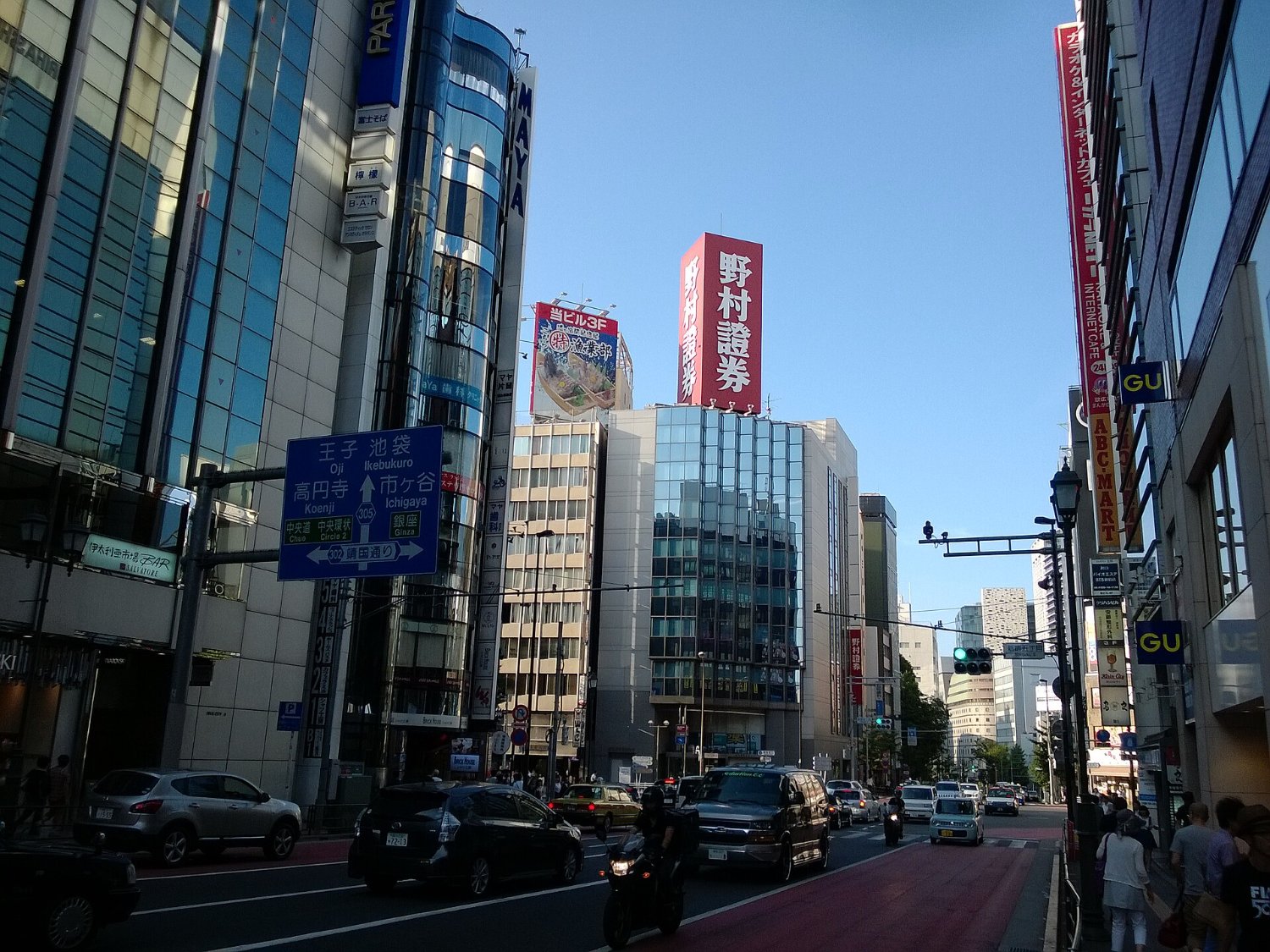
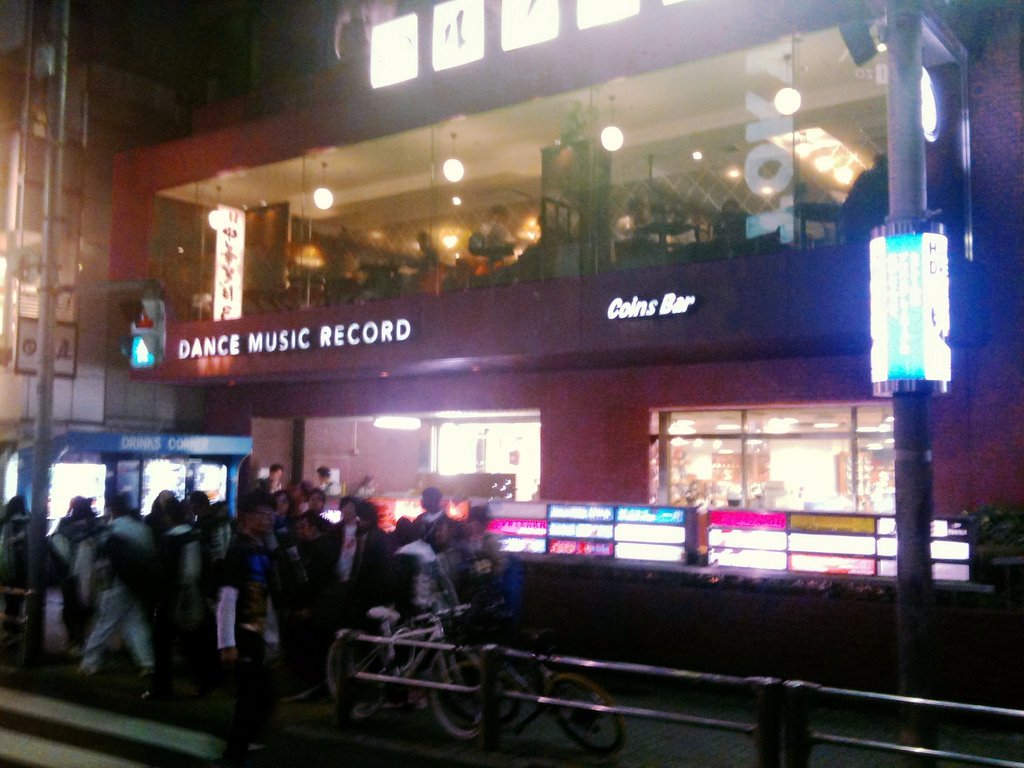
Shinjuku 3-chome street: photo by Jie Yang, CC BY 3.0, via Wikimedia Commons. Record shop interior: photo by street viewer2, CC BY 2.0, via Wikimedia Commons.

Comments