Tokyo is the best city in the world for buying used clothes, and it is not close. Four decades of importing American workwear, wearing it carefully and cycling it back onto the racks have left the city with more vintage per square kilometre than anywhere else, graded honestly and priced across an enormous range.
What the guides skip is that this is not one scene. It is three, they keep different hours, they treat tax-free differently, and one of the buildings most of them still list has already been demolished. This page is how the pieces fit together; the shop-by-shop detail is in the area guides.
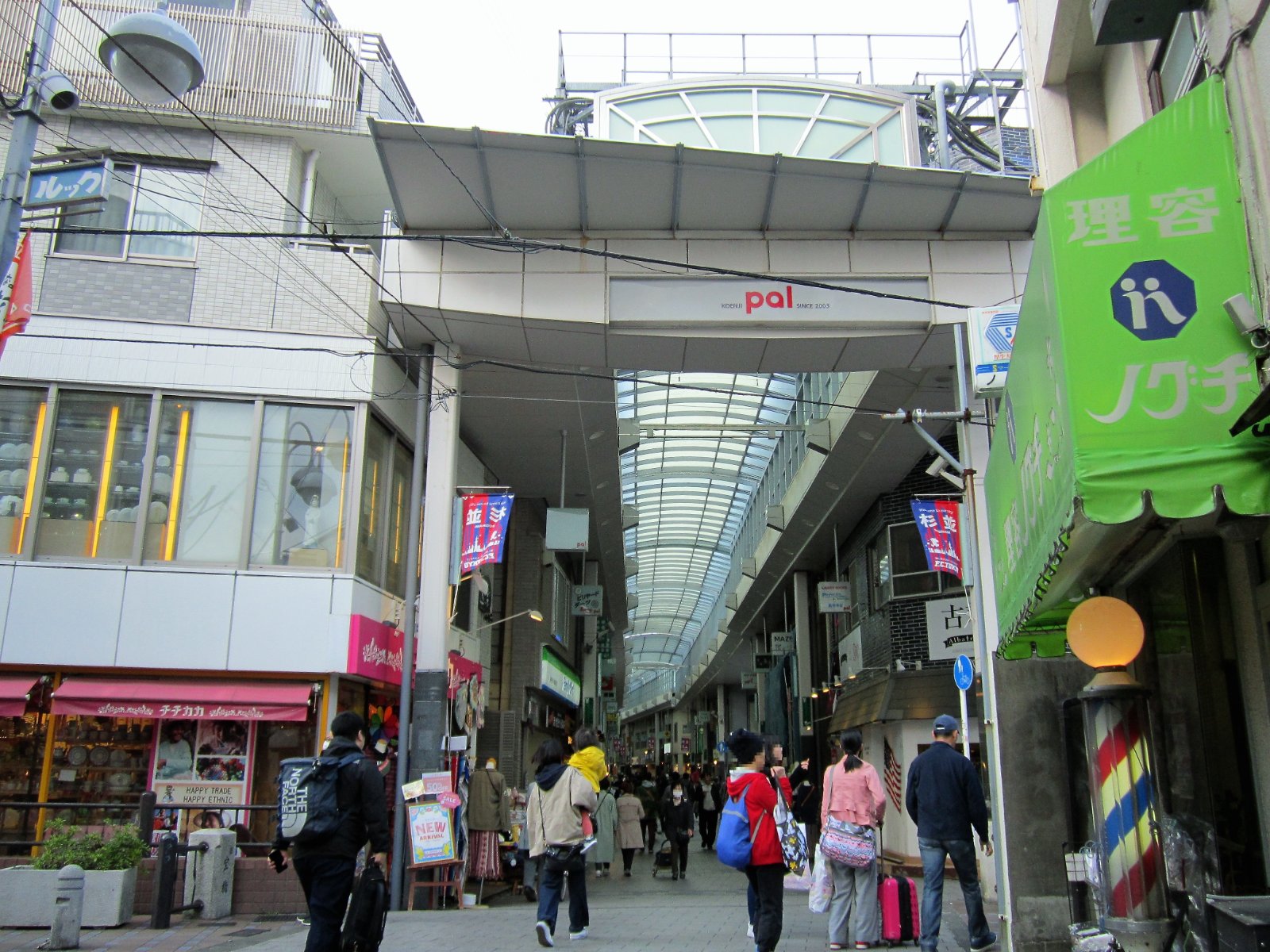 KoenjiTokyo’s thrifting heartland — dense, characterful, and where locals actually shop.
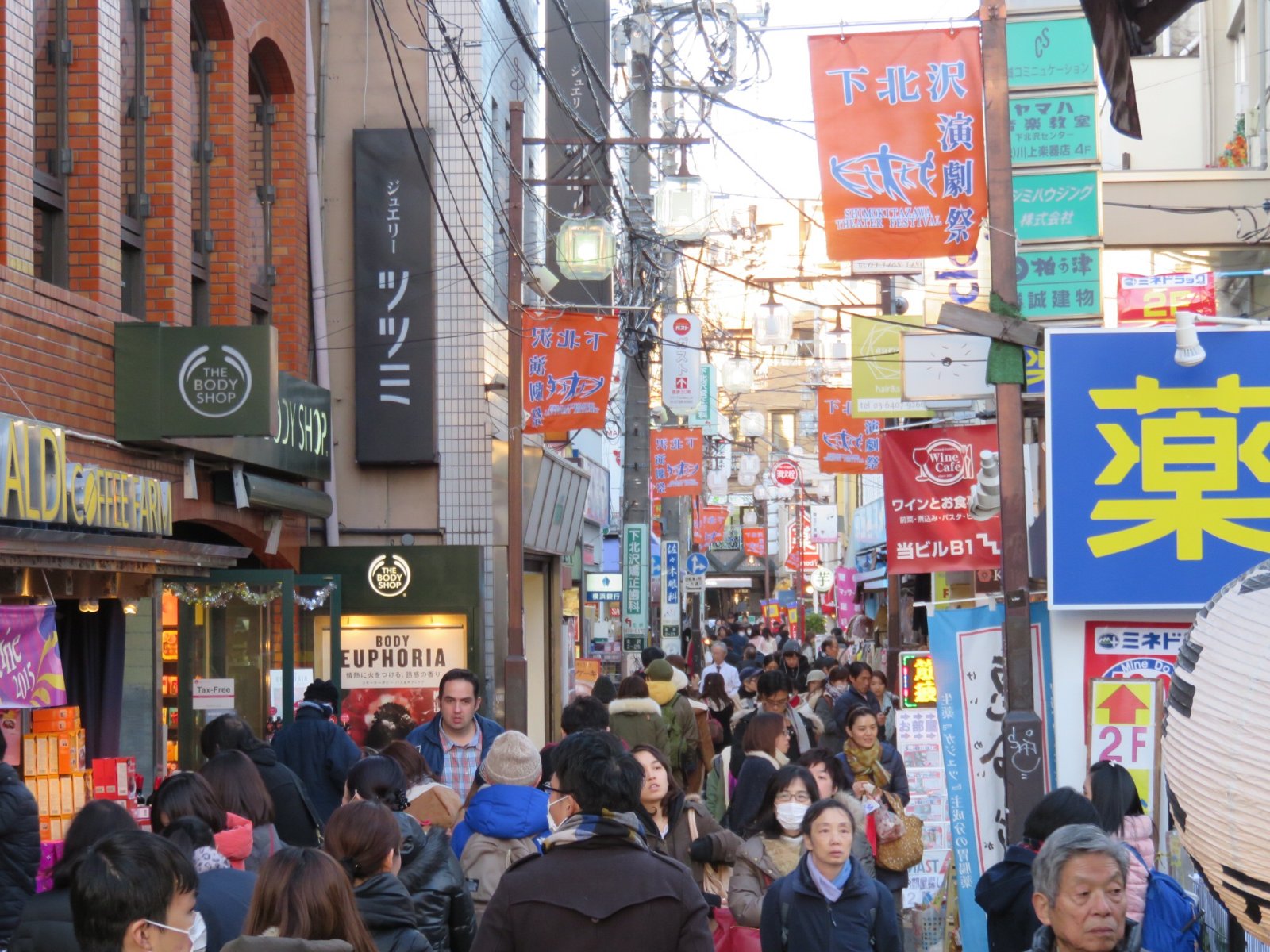 ShimokitazawaThe biggest secondhand scene, spread across a maze of small, curated shops.
- Three scenes, not one
- The shops run on two different clocks
- From 1 November 2026, tax-free and luggage forwarding stop being compatible
- The chains and the independents are different businesses
- Your guidebook is describing shops that have closed
- Koenji’s railway arches are on borrowed time
- Sizing is only a problem on half the racks
- Where to put your bags
- Plan a route between shops
- Beyond Tokyo & related
Three scenes, not one
A fourth is worth knowing about even though it is smaller: Kichijoji, fifteen minutes from Shimokitazawa on the Inokashira line, where the shops split cleanly between imported vintage and designer resale on the south side and the big chains in the arcade on the north. Two of its four shops are registered tax-free, which most independents are not — see our Kichijoji vintage clothing guide. A fifth is really half of a sixth: Shibuya has two shops worth the trip, both in Jinnan, and everything else on a “Shibuya vintage” list is fifteen minutes north in Harajuku — including the shop that has sold second-hand kimono there since 1966. See our Shibuya vintage clothing guide.
Koenji is the dense, cheap, local end. The shops cluster along two shopping streets that read as one continuous strip running south from the station — PAL, which is the covered arcade, and Look, which is the open-air continuation towards Shin-Koenji — plus the Kitakore Building a few minutes north. It is the only one of the three where a shop can survive selling everything at ¥990 or less: UNDER900 opened on Look in March 2023 with no staff, no fitting rooms and a ticket machine for payment.
Shimokitazawa is bigger, more spread out and more curated, and the map moved recently. When the Odakyu line went underground the vacated track bed became a 1.7 km chain of developments that finished opening in May 2022, and the Keio Inokashira viaduct picked up its own complex the same year. Shops are scattered across all of it rather than concentrated on one street.
Harajuku and Ura-Harajuku are the archive tier: tiny first-and-second-floor rooms on Jingumae 2 and 3-chome, each with a single narrow remit — UK only, West Coast tees only, 90s streetwear only. BerBerJin alone runs seven shops between Harajuku and Shimokitazawa. A vintage T-shirt specialist that opened in November 2025 carries stock valued at over ¥2 billion, with pieces from about ¥10,000 to over ¥1,000,000.
The shops run on two different clocks
Of fourteen independent vintage shops in Koenji, not one opens before midday. The most common opening time is 13:00 and the most common closing time is 20:00. Ura-Harajuku is the same or later — some shops open at 14:00 on weekdays, and BerBerJin’s seven branches all close at 19:00.
The chains keep ordinary retail hours. Chicago’s six shops trade 11:00–20:00, every day of the year except 1 January. Kinji and Ragtag in Harajuku are also 11:00–20:00, 2nd STREET in Koenji runs 11:00–21:00, and Mode Off in Ueno-Okachimachi opens at 10:00.
So the day has a shape whether you plan one or not: chains in the morning, independents from about one o’clock, and everything shuts by eight. Independents also take days off midweek, most often Wednesday and Thursday. A Wednesday morning in Koenji is the worst possible slot.
From 1 November 2026, tax-free and luggage forwarding stop being compatible
Used clothing has always qualified for Japan’s tax-free scheme — there is no secondhand exclusion — and the threshold of ¥5,000 before tax, per shop, per day, survives the November change. What changes is the mechanism. From 1 November 2026 you pay the tax-inclusive price at the till and get the consumption tax back afterwards, once customs has confirmed you actually exported the goods.
That confirmation happens at your final departure airport, within 90 days of purchase, and it requires the goods to be with you, in your cabin baggage. Send your haul ahead to the airport by takkyubin, or check it into the hold, and there is nothing for customs to look at and no refund. The old workaround of shipping tax-free purchases separately by post was abolished in April 2025.
Customs also assesses each purchase record as a single unit: if one item on a receipt cannot be verified, the whole receipt loses its tax-free status. If you are buying more than you can carry, split the decision in two — what flies home in your cabin bag with the refund attached, and what you ship and simply pay the tax on. There is a third option people forget: the same secondhand stock is on Japan’s domestic resale sites, which do not ship abroad — a proxy service like Buyee buys on your behalf and forwards it, so the pieces that will not fit in the cabin bag do not have to come home with you.
The chains and the independents are different businesses
They sell the same category and almost nothing else about them matches. 2nd STREET had 931 stores in Japan as of 31 March 2026, with apparel and accessory sales up nearly 20% year on year. Book Off puts its clothing in its Super Bazaar format — 55 of roughly 577 domestic stores. Mode Off, the Hard Off group’s clothing chain, has 65 shops nationwide and only seven in the whole of Tokyo. On the other side, Chicago has been trading since 1966 and has six shops, Kinji has fourteen with four in Tokyo, and Ragtag’s 24 shops are owned by World, one of Japan’s largest mainstream apparel groups.
The practical difference is tax-free. The chains are registered and staffed for it: 2nd STREET runs tax-free counters, and Book Off operates it at every directly-run store — though it has charged a 3% handling fee on tax-free transactions since 2 September 2025. Independent shops mostly are not registered at all. If the refund matters to your budget, it will come from the chains, not from the good stuff.
Your guidebook is describing shops that have closed
Toyo Hyakkaten’s main building — the twenty-tenant secondhand warren that anchored Shimokitazawa — closed on 30 March 2025 after 22 years, and the building is coming down. English guides still list it. The annex survives inside the Keio complex and trades 11:00–20:00, and two of the displaced tenants reopened nearby in April 2025.
Panama Boy’s Harajuku shop closed on 26 October 2025 after 46 years; the company said the neighbourhood had changed beyond what the location could carry. The brand still trades from its Tomigaya base. Haight & Ashbury, three minutes from Shimokitazawa’s north exit, closed on 11 November 2022 after about thirty years, and the red high-heel sculpture went with it.
Chicago’s Harajuku flagship closed on 24 March 2020 after 37 years, and the block was redeveloped — Tokyu Plaza Harakado, which opened on that site on 17 April 2024, is standing where the shop was. Chicago’s other Harajuku branches carried on. One thing worth getting right: the older Tokyu Plaza across the crossing was not demolished, it was renamed.
Koenji’s railway arches are on borrowed time
The strip of shops under the JR viaduct west of Koenji station has been trading since 1966. JR East’s development arm is redeveloping it and tenants have been asked to relocate by spring 2026, with local reporting citing the buildings’ age and fire risk. Nothing has been announced about what replaces them. Separately, a road scheme that would cut through Junjo Shotengai drew a petition of more than 10,000 signatures in November 2025. If you want to see this version of Koenji, this is the year to do it.
Sizing is only a problem on half the racks
Most of the American stock in Koenji and Shimokitazawa still carries its original US tags and fits the way it always did. The trap is Japanese-domestic secondhand labelled S/M/L, which runs about a full size small: Japanese men’s L covers a 96–104 cm chest and LL covers 104–112 cm, so a US large is a Japanese LL — a size that turns up far less often secondhand. The Koenji guide has the detail, along with what the tag words mean and the fitting-room etiquette.
Where to put your bags
Shimokitazawa is the awkward one because the lockers are split by payment method. The Odakyu central exit banks take cash or IC at ¥500/¥600/¥800. Both Keio Inokashira banks are IC card only, at ¥500/¥600/¥900. The bank in front of Don Quixote is the cheapest at ¥300/¥400, takes cash only, and is the only one open 24 hours. Station lockers otherwise close with the station, and a second day’s charge starts at 02:00.
Yamato’s airport takkyubin will take up to 30 kg to your departure airport for a ¥660 handling fee if you send it two or three days ahead — but read the November tax-free section again before you send anything you claimed a refund on. Rough prices for everything else on a shopping day are in the Japan travel budget guide, and the Shimokitazawa guide covers which shops opened since 2025. If the haul has outgrown the suitcase entirely, Buyee will consolidate and forward a box home for you.
Plan a route between shops
Vintage shops cluster on side streets and change fast. Drop the ones you want into our Route & Budget Planner for a sensible walking order and a rough budget before you go.
Beyond Tokyo & related
Heading to Kansai? Osaka’s Amerikamura is the west’s answer to Koenji — see our Den Den Town & Amerikamura guide. Digging for vinyl too? Pair vintage with our Tokyo Record Shop Guide, and browse everything under Subculture Guides. Remember that tax-free is uncommon in independent vintage shops — used clothing does qualify under Japanese law, but most small shops are not licensed tax-free stores — see our tax-free & shipping guide.
Photo credit
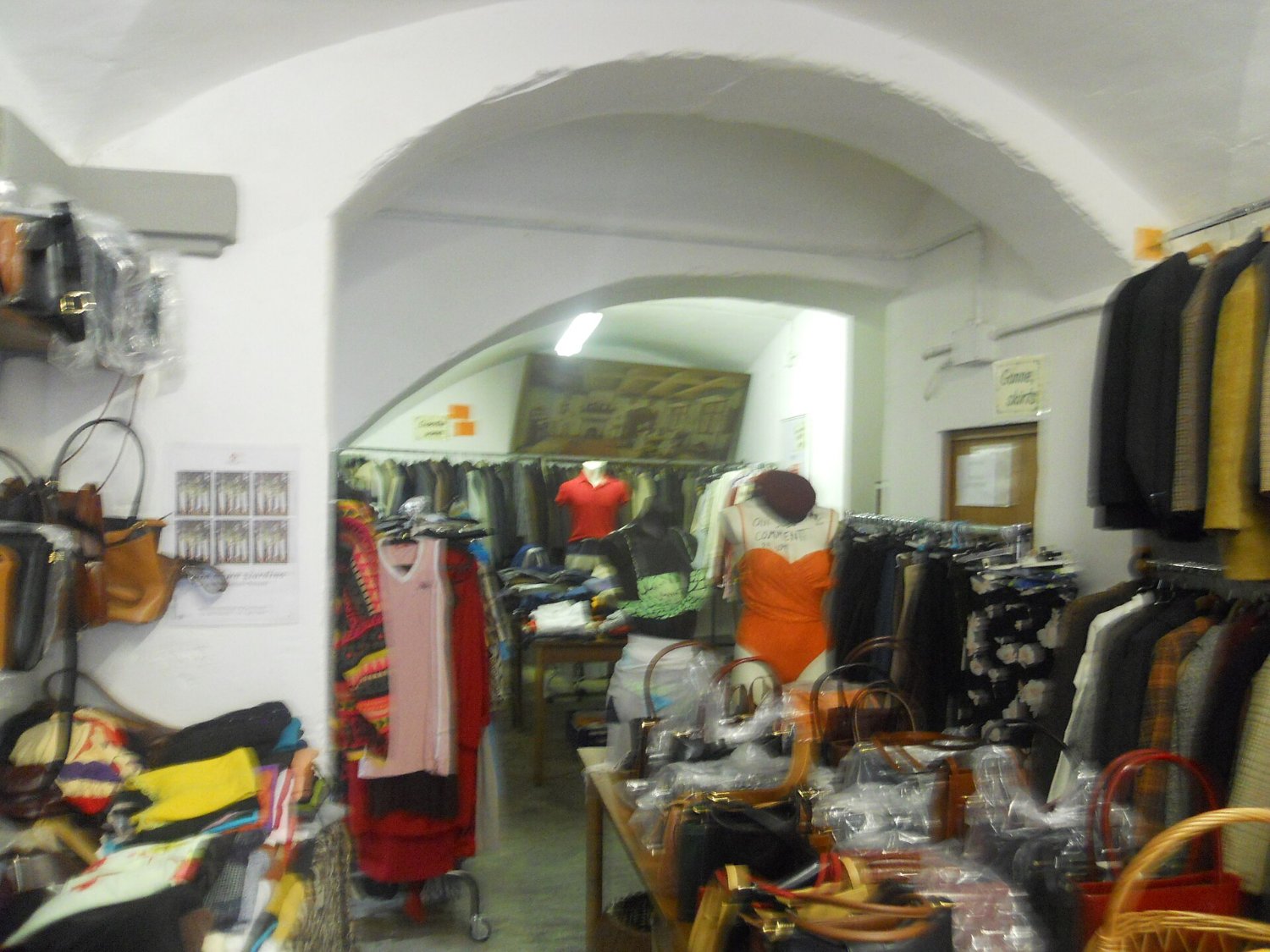
Header image: “Florence Vintage Clothing Store” by Erik Drost (Wikimedia Commons, CC BY 2.0) — representative image of a vintage clothing store.