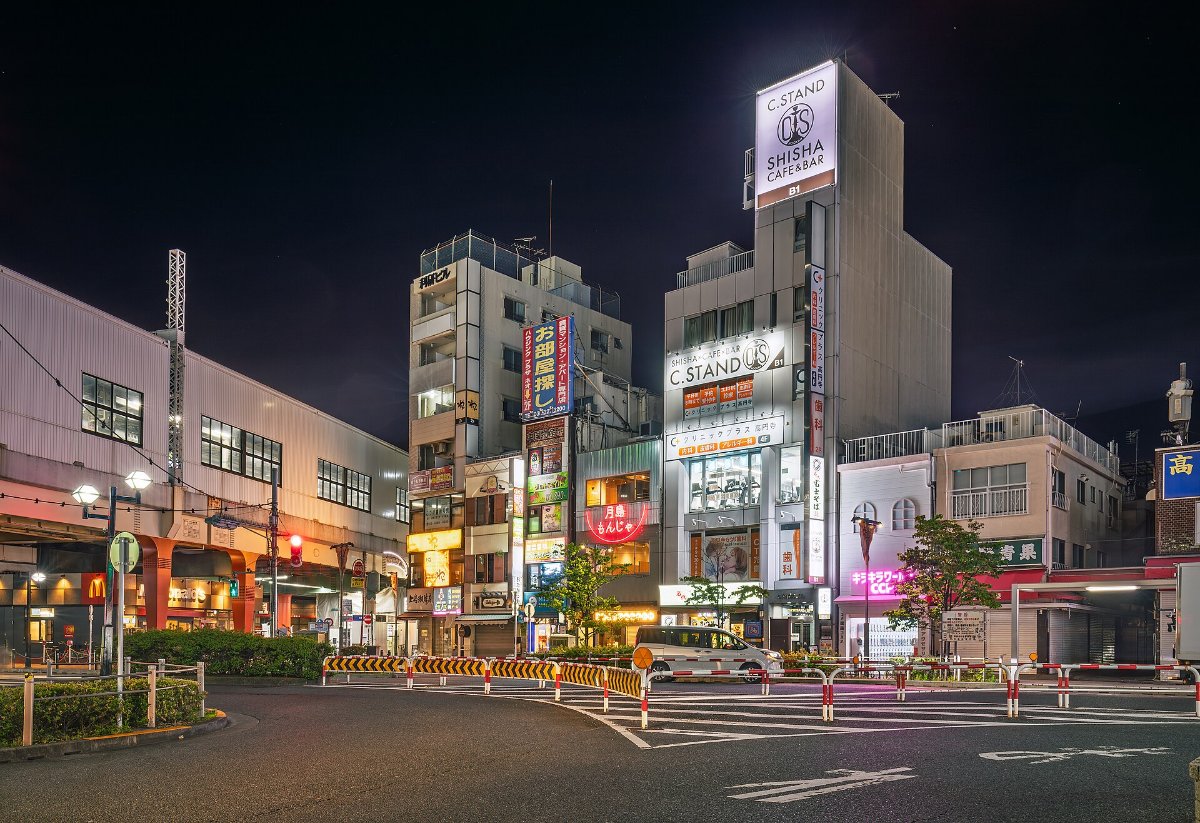
Information accurate as of August 2026. Koenji’s shops are small and independent and they open and close quickly — confirm before making a special trip. Several places that still appear in English guides have closed; we list them at the end.
Koenji is six minutes from Shinjuku and about thirty years behind it, in the best possible way. Within a ten-minute walk of one small station you get roughly 150 independent vintage shops, five serious record stores, a 1930s bathhouse, two of Tokyo’s longest-running live houses, and a junk shop that doubles as the headquarters of the neighbourhood’s anti-consumerist street culture. Nothing here is a chain, and almost nothing is designed for visitors.
That also makes it easy to waste a day. Koenji’s shops are spread across half a dozen named shopping streets on two sides of the station, and which exit you leave from decides what you see. This guide covers how to get there, which street leads where, and the shops worth your hours — records, vintage, and everything that is neither.
Getting to Koenji
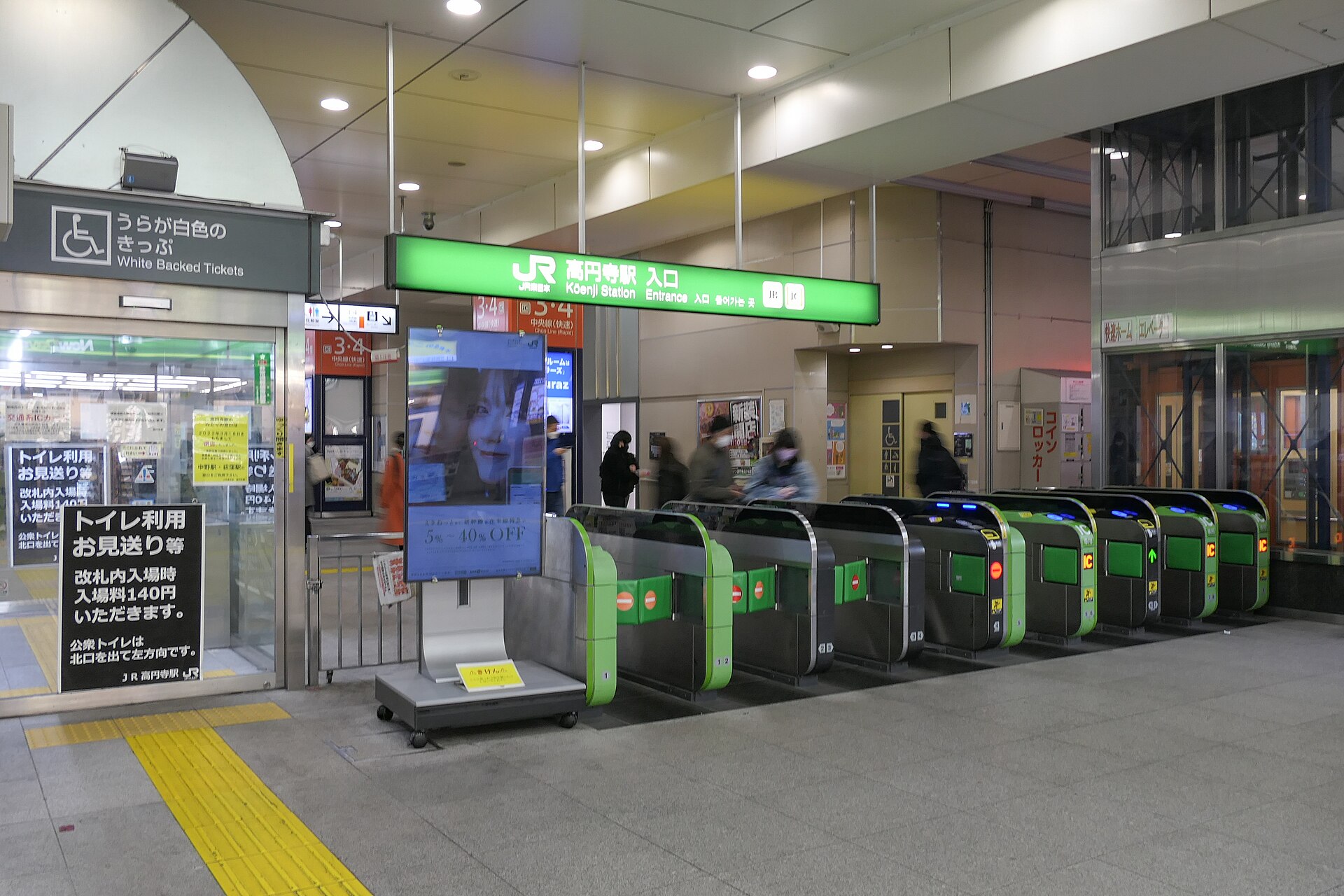
From Shinjuku it is a single stop-free ride on the JR Chuo Line — about 6 minutes on the orange Chuo Rapid, 10 on the yellow Chuo–Sobu Local, around ¥200 either way. From Shibuya, take the Yamanote to Shinjuku and change: roughly 20 minutes and ¥210 in total.
One trap worth knowing. The orange Chuo Rapid does not stop at Koenji on Saturdays, Sundays or public holidays — it runs straight through, along with Asagaya and Nishi-Ogikubo. At weekends you need the yellow Chuo–Sobu Local. The Chuo Special Rapid never stops here at all. This catches out a lot of visitors who checked the route on a weekday.
Which exit, which street
Koenji has two halves and they are good at different things. The rule of thumb: south exit for vintage and records, north exit for junk, instruments, the bathhouse and the counterculture side, and the west exit after dark for drinking under the railway arches. The two halves are about ten minutes apart on foot through the station underpass.
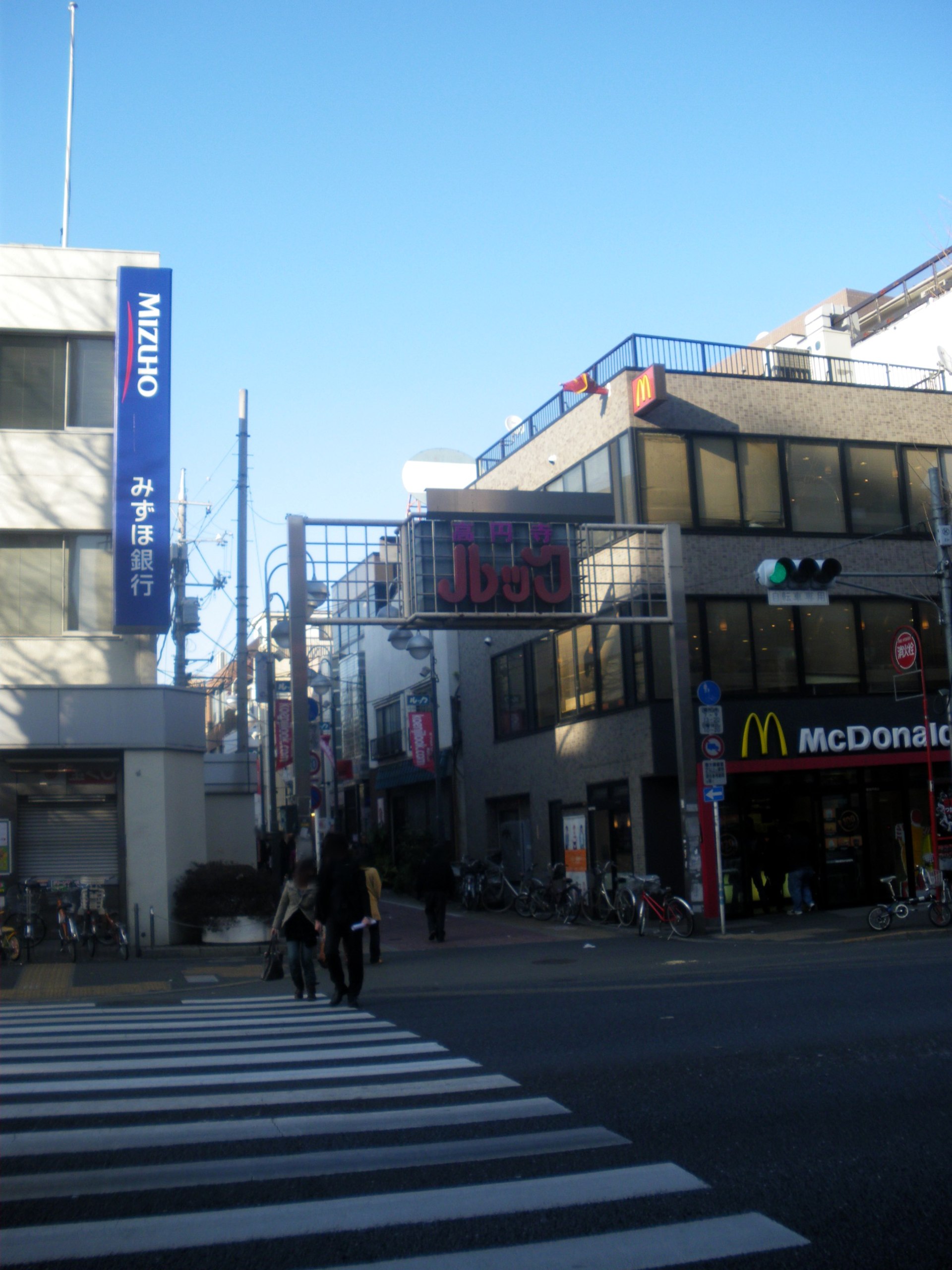
- Pal Shotengai (south, covered arcade) — runs straight south from the station. Roofed, so this is the rainy-day route. Record shops and Awa Odori-related shops.
- Look Shotengai (south, continues from Pal) — the vintage spine, 150-plus independents running toward Shin-Koenji. Most of the shops below are on or just off it.
- Etoile-dori (south, branches off Look) — more vintage and records, named after a 1950s cinema.
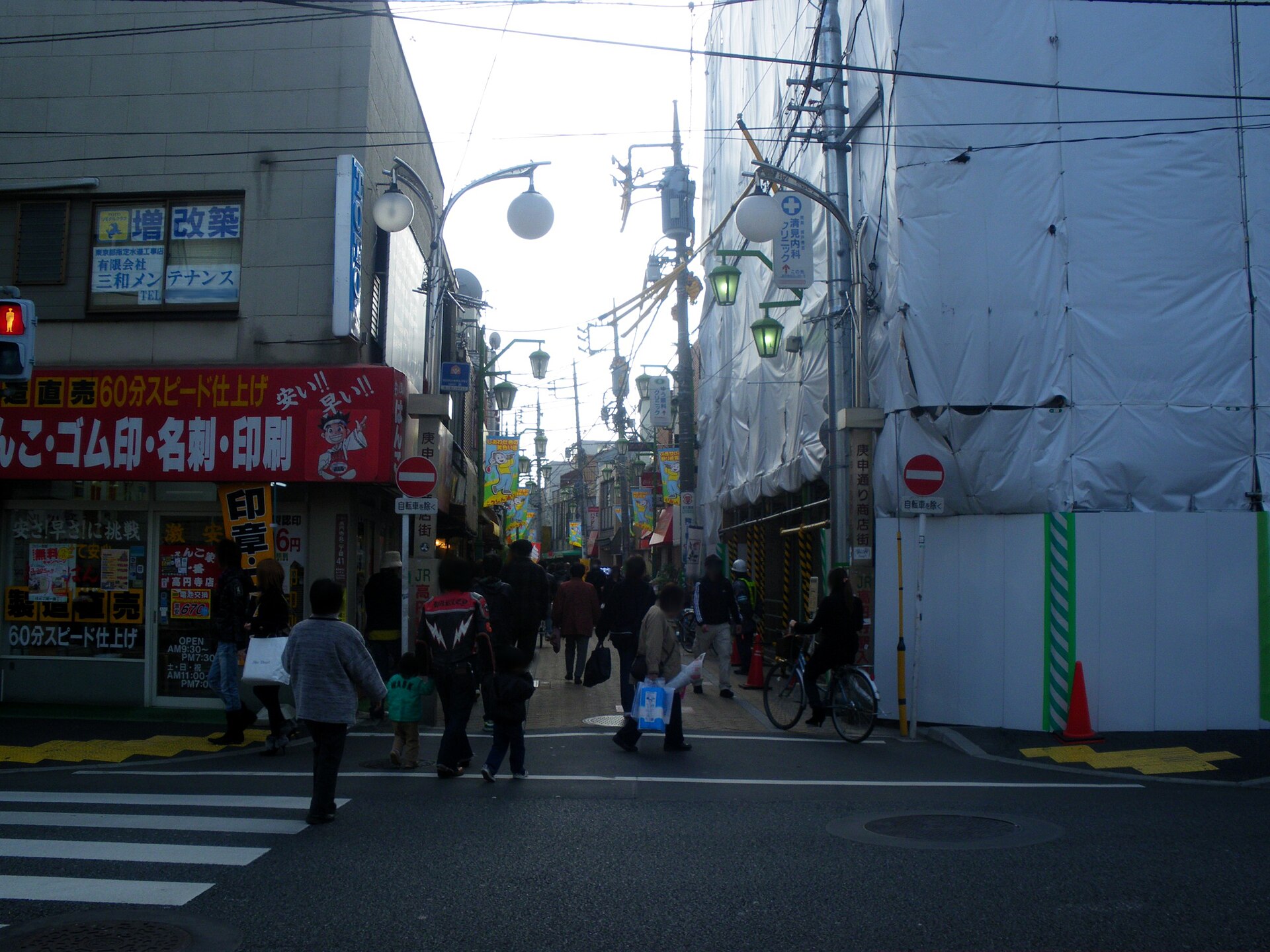
- Junjo Shotengai (north, green-and-yellow arch) — a pre-war shopping street of everyday shops rather than boutiques.
- Kita-Nakadori (north, past Junjo) — the DIY and counterculture stretch, and the site of the Kitanaka night market.
- Azuma-dori and Koshin-dori (north) — older, quieter shops, used bookshops, cheap eating.
- Nishi Shotengai (west, under the elevated tracks) — tiny standing bars and izakaya. Dead by day, full after 19:00.
Record shops
Koenji is the best record neighbourhood in Tokyo that is not Shibuya, and it is a different proposition: five shops, each narrow and deep, run by people with a position. If you want breadth, go to Shibuya. If you want to be shown something, come here.
Los Apson?
Thirty years of refusing to file records by genre. Keiji Yamabe’s shop stocks noise, ethnographic recordings, private pressings, outsider art books and cassettes, most of it with handwritten Japanese notes stuck to the sleeve. It is the reference point for Japanese underground heads and it barely registers in English guides. Come with an open mind rather than a want-list.
Sanko Bldg. 1F, 4-3-2 Koenji-Minami · about 5 minutes from the south exit, Look area · 13:00–19:00 · closed Wednesdays
UNIVERSOUNDS
A small second-floor room run by Yusuke Ogawa, the man behind the Deep Jazz Reality reissue series — which tells you the standard. Japanese jazz, spiritual jazz, rare groove and breaks, curated rather than piled. This is the Tokyo address for Japanese jazz specifically, and prices reflect that.
Plaza U 202, 3-46-9 Koenji-Minami, in the Pal arcade · about 5 minutes from the south exit · 14:00–19:00 · closed Tuesdays and Wednesdays
BE-IN RECORDS
British originals, graded strictly: mod, ska, freakbeat, psych and prog, mostly first pressings. If you care which matrix number you are buying, this is the shop that will have the answer. Not the place for a casual flip.
3-57-8 Koenji-Minami, 2F · 3–5 minutes from the south exit · weekdays 12:30–19:30, weekends 11:00–19:30
RECORD SHOP BASE
Open since 1997 and internationally known as the counter for Japanese hardcore and self-released 7-inches — around 6,000 items in one third-floor room. If you came to Tokyo for Japanese HC, other shops will send you here. Suntrap, below, is on the ground floor of the same building.
ACP Bldg. 3F, 4-23-5 Koenji-Minami, Look Shotengai · about 5 minutes from the south exit · 12:00–21:00 · open year-round except New Year
European Papa
The cheap-and-deep end: roughly 6,000 LPs, 3,500 seven-inches and 10,000 CDs crammed into a narrow room since 1994, mixed in with old books and bric-a-brac. Rock, new wave, post-punk, jazz, Brazilian. No curation safety net — you flip, and you are rewarded for patience. It also stays open until 21:00, later than anything else on this list.
2-35-14 Koenji-Kita, Azuma-dori · about 5 minutes from the north exit · 14:00–21:00 (Sundays and holidays to 20:00) · closed Tuesdays and the 1st and 3rd Wednesday
Getting your records home. A dozen LPs is heavier than it sounds and will quietly eat both your baggage allowance and your back. Two different problems here, with two different answers. Koenji sells used, and used Japanese records almost never leave the country through ordinary retail — for those, see the note on proxy buying in the vintage section below, because the same route works for vinyl and clothing alike. New releases are the opposite case: Japanese domestic pressings ship with the obi strip that collectors actually want, they are rarely stocked outside Japan, and CDJapan sends them internationally, new and direct. Nothing here replaces a morning on Azuma-dori, but between the two you should not be leaving anything behind.
Vintage clothing
Koenji is where Tokyo’s secondhand scene goes for volume and bargains rather than curated boutique prices — the counterweight to Shimokitazawa. Our Koenji vintage clothing guide covers the Kitakore Building and the Look Shotengai regulars in detail. Three more worth building a route around:
Suntrap is the serious end — pre-1960s American workwear, shirts and jackets, at a rarity level other dealers buy from. It draws collectors in their thirties and forties rather than students, and it stays open until 21:00 on weekdays.
ACP Bldg. 1F, 4-23-5 Koenji-Minami, Look Shotengai · about 5 minutes from the south exit · weekdays 13:00–21:00, weekends 12:00–20:30
BoobyTRAP is the opposite pole: twenty-odd years on Look Shotengai selling used clothing mostly under ¥700, band tees included, plus its own house label. This is where you fill a bag rather than buy one piece.
3-37-23 Koenji-Minami, Look Shotengai · 4–5 minutes from the south exit · 12:00–20:00 · open daily
militaria does one thing: 1980s and 90s European army issue — field jackets, liners, cargo trousers — sourced across Europe and repaired before sale. For military cut as everyday clothing rather than reproduction Americana.
3-57-31 Koenji-Minami, Look / Etoile area · about 5 minutes from the south exit · 14:00–20:00 · open daily
Buying Koenji vintage after you have gone home. Almost none of these shops ship abroad and many have no online store at all — but a large share of the same stock, from the same dealers, ends up listed on Yahoo! Auctions and Mercari. Both reject foreign cards and foreign addresses, which is the whole reason proxy services exist: Buyee bids and buys in your name, receives the parcels in Japan, consolidates several sellers into one box and forwards it to you. It solves the sizing problem too. If a jacket in Look street was one size out, the same piece in a different size is usually sitting on one of those platforms, and it is the only realistic way to keep digging Koenji from another country.
Everything that is neither
Shirouto no Ran 5-goten — a recycle shop selling fridges, amps, furniture and instruments, and simultaneously the organising centre of Koenji’s DIY street culture and its night market. It turned twenty in 2025. If you want to understand why Koenji is Koenji rather than just shop in it, start here. 3-9-11 Koenji-Kita, Kita-Nakadori · 5–7 minutes from the north exit · 12:00–22:00 · irregular closing days
Kosugiyu — a 1933 wooden bathhouse with a milk bath and a different infused bath each day, open until 01:30. At ¥600 it is the standard way to end a Koenji night, and the most-loved building in the neighbourhood — a registered Tangible Cultural Property since 2020, and one of the few Tokyo bathhouses where tattoos are welcome in the communal bath. 3-32-17 Koenji-Kita · about 5 minutes from the north exit · weekdays 14:00–01:30, weekends and holidays from 08:00 · closed Thursdays
JIROKICHI — a 45-seat basement live house running since 1975 and still booking nightly: blues, roots, jazz, jam sessions. Table seating and two minutes from the station make it the easiest room in Koenji to simply walk into. Cash only; music charge plus a drink. Koenji Bldg. B1, 2-3-4 Koenji-Kita · 2 minutes from the north exit · doors usually 18:30
U.F.O. CLUB — open since 1996 and often called the head temple of Far East underground rock: mirrorball, burgundy curtains, psychedelic murals, 120 capacity. Yura Yura Teikoku played here early. Note it is nearer Higashi-Koenji on the Marunouchi Line than JR Koenji. Harmony Hills B1, 1-11-6 Koenji-Minami · 3–4 minutes from Higashi-Koenji, or a 15-minute walk from JR Koenji · times vary by event
R-za Dokushokan — a second-floor reading room of ferns, aquariums and antique desks where conversation is banned outright. Open until 22:30, which makes it the one place to decompress between record shops and a live house. 2F, 3-57-6 Koenji-Minami · about 5 minutes from the south exit · 12:00–22:30 · closed Mondays
AV GARAGE — a used instrument shop trading since 1985, walls of secondhand guitars, pedals and amps. The browsable end of the Tokyo guitar market, without Ochanomizu prices. 2-22-2 Koenji-Kita · 3 minutes from the north exit · 12:00–20:00 · closed Wednesdays
How to plan a day here
- Do not arrive early. Most shops open between 12:00 and 14:00, and the record shops later still. Arriving at 13:00 and staying until the bathhouse is the natural shape of a Koenji day.
- Check the day of the week. Wednesday is brutal here — Los Apson?, UNIVERSOUNDS and AV Garage all close, and Kosugiyu closes Thursdays. A Tuesday or Wednesday trip can cost you half the list.
- Pick one side of the station per half-day. South for vintage and records, north for junk, instruments and the bathhouse. Crossing back and forth wastes the time you should be spending in shops.
- Bring cash. Small independents, handwritten prices, and some places are cash-only. Tax-free is rare in Koenji. Used clothing and used records do qualify under Japanese law, but almost none of the independents are licensed tax-free stores — the chains are, so look for the “Japan. Tax-free Shop” sticker.
- Weekends: yellow train only. See the warning above — the orange Chuo Rapid skips Koenji on Saturdays, Sundays and holidays.
Closed — and still in other guides
Koenji turns over fast and English-language guides lag by years. Cross these off:
- Cocktail Shobo (コクテイル書房), the book-bar in almost every English Koenji guide — took its sign down in spring 2026 and its Taisho-era building began demolition in August 2026. It is said to be reopening nearer the station, but there is no confirmed address yet.
- Hon no Nagaya, its neighbour in the same building — gone with it.
- Bunrokudo Koenji — closed June 2025.
- Enban — left Koenji for Hikone after 21 years.
Nearby
Koenji sits on the same line as several other stops worth a detour. Nakano Broadway is two stops toward Shinjuku and covers collectors’ goods rather than clothing. Ride seven minutes the other way and Shinjuku has eighteen Disk Union shops in four buildings — the opposite of Koenji in every respect except the opening hours. For records citywide, start with our Tokyo record shop hub; for secondhand clothing, the vintage hub compares Koenji with Shimokitazawa. When you have picked your shops, drop them into the Route & Budget Planner for a walking order.
Photo credit
Header image: “At Kōenji Station” by Ximonic (Simo Räsänen), Wikimedia Commons, CC BY-SA 4.0.
If the west exit gets you thinking about the tracks rather than the shops, the same idea is done at scale under the railway in central Tokyo — see our Yurakucho standing bar guide.