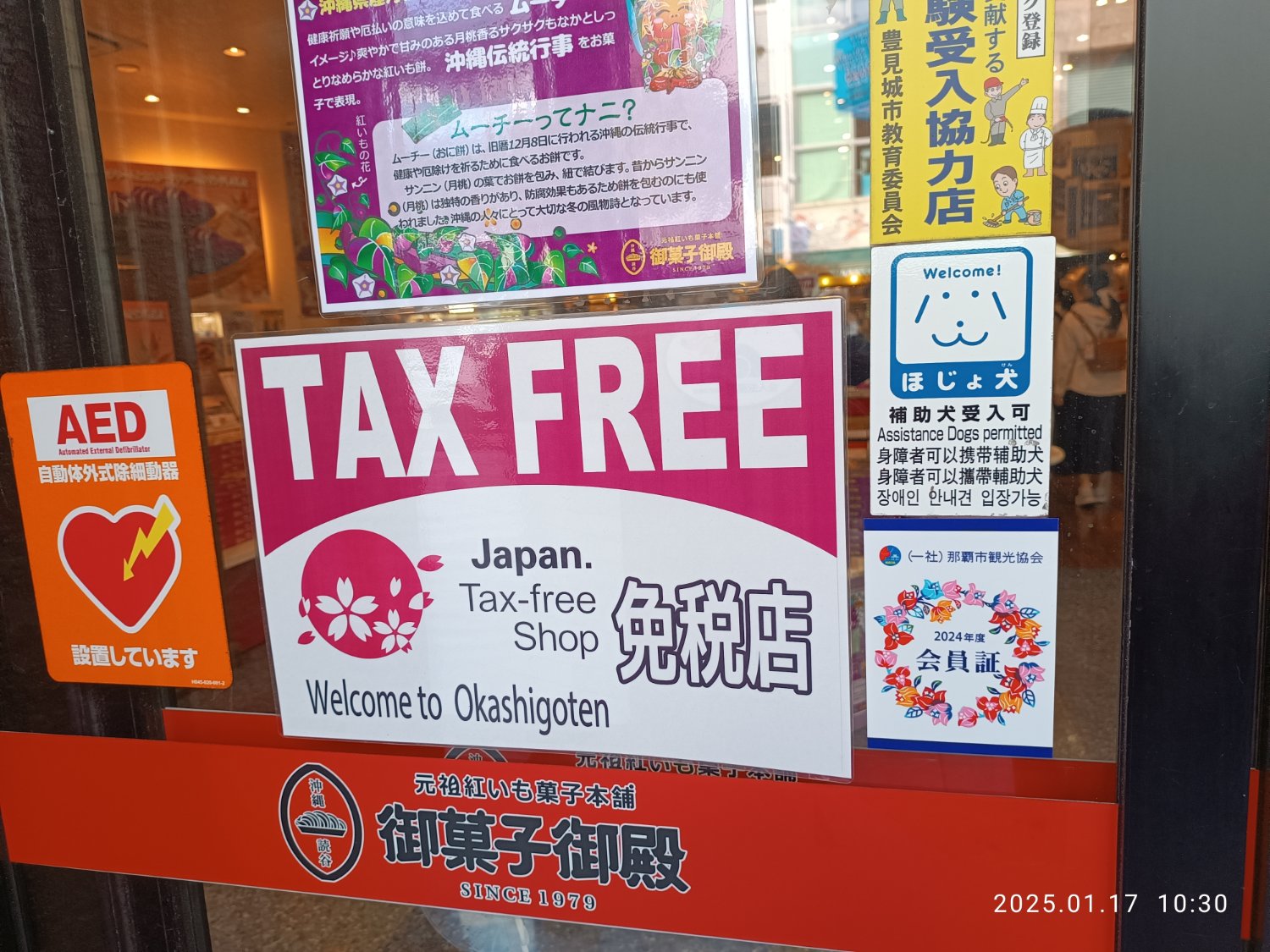
If you’re coming to Japan to shop — figures, vintage, records, doujinshi, whatever your thing is — the single most important change to know about in 2026 is this: from 1 November 2026, Japan’s tax-free system switches from an instant discount at the register to a refund you claim when you leave the country.
That changes how much cash you need on hand, how you pack, and what you do at the airport. Here’s the practical version, plus the other half of the problem nobody warns you about: how to actually get your haul home.
Information accurate as of August 2026. This is a major rule change and details may be refined before it takes effect; confirm against official sources close to your travel date.
- What’s changing on 1 November 2026
- The rules that stay the same
- The new bit: you must complete a step at the airport
- You cannot do it after you check your bags
- One missing item voids the whole receipt
- Ninety days is not an improvement for everyone
- Your figures and your snacks now count towards the same ¥5,000
- How you actually get the money back is still unsettled
- Second-hand goods: eligible, but only at registered shops
- Tax-free and shipping it home are an either/or
- Getting your haul home
- Where to put your bags while you shop
- A shopping day that actually works
What’s changing on 1 November 2026
- Before (until 31 October 2026): you show your passport at the register and pay the tax-free price on the spot. Consumables get sealed in a bag you’re not supposed to open until you leave.
- After (from 1 November 2026): you pay the full tax-inclusive price in the shop, then claim the 10% consumption tax back when you depart Japan.
Two things genuinely get better under the new system: the sealed-bag requirement for consumables is abolished, and the awkward split between “general goods” and “consumables” is being phased out. If you’ve ever had a shop assistant tape your snacks into a bag you couldn’t open for a week, that’s going away.
The rules that stay the same
- ¥5,000 minimum (before tax) at the same store on the same day.
- You need your passport — a photo or photocopy is not accepted.
- It applies to short-term visitors, not residents.
The new bit: you must complete a step at the airport
Dedicated tax-refund terminals are being installed at the major international airports — Narita, Haneda, Kansai, Chubu, Fukuoka, New Chitose and Naha — and there will be an option to complete part of the process online through Visit Japan Web. You must depart within 90 days of purchase for the refund to remain valid.
Practical impact: budget for the full tax-inclusive price while you’re in Japan. If you were planning to spend ¥100,000 on figures, you now need ¥110,000 in hand and get the ¥10,000 back later. That matters a lot in cash-only districts. And leave extra time at the airport, especially in the first months after the change while everyone works out the new queues.
You cannot do it after you check your bags
This is the part that catches people out, and it is not a rumour. The Japan Tourism Agency’s own traveller guidance says the customs confirmation has to be completed before you go through boarding procedures, and that the procedure cannot be done once your luggage has been checked in. The refund exists only if an officer can confirm the goods are leaving the country with you, and nobody can confirm what is already in the hold.
For a traveller with a bag of clothes this is a mild inconvenience. For anyone flying home with a suitcase of figures, a stack of records and a boxed console, it is a logistics problem: you have to arrive with the haul accessible, clear customs, and only then join the check-in queue. The layout differs by airport and some were still publishing final arrangements as of August 2026, so allow considerably more time than usual in the first months.
One missing item voids the whole receipt
The unit being checked is the purchase record, not the individual item. Everything on a tax-free transaction has to be present at departure. Eat the snacks, give one keychain away, post half the bag home, and the refund on that entire transaction disappears — including the expensive thing you were actually claiming for.
So keep tax-free purchases separate from anything you intend to eat, use or give away. If you are buying a mixed haul somewhere like Don Quijote, be deliberate about what goes on which receipt rather than letting the till decide for you.
Ninety days is not an improvement for everyone
The old scheme ran two clocks: consumables had to leave Japan within 30 days, general goods within six months. The new one uses a single 90-day window for everything. On a two-week trip that is a straight upgrade for snacks and cosmetics. On a long stay it is a downgrade — if you buy a display case in your first month, the six-month window that used to cover you no longer exists.
Your figures and your snacks now count towards the same ¥5,000
This is the quiet win nobody mentions. The old scheme judged the ¥5,000 threshold separately for general goods and consumables, so a ¥3,000 figure and ¥2,500 of Pocky at the same shop on the same day cleared neither bar. From November the two categories are no longer split when that judgement is made, so the same basket qualifies. The ¥500,000 ceiling that used to apply to consumables is abolished at the same time, and the sealed bags go with it.
How you actually get the money back is still unsettled
Officially the refund comes from the shop you bought from, or from a refund operator acting on its behalf. What that means in practice — cash at a counter, a credit-card reversal, a transfer to a digital wallet, and how long any of it takes — is being settled shop by shop rather than nationally. The Japanese tax-free industry body still had the refunds section of its own public Q&A marked as in preparation in August 2026, and published reports of processing times range from immediate to several weeks.
Two things to plan around: do not assume you will be handed yen at the airport to spend on the way out, and if the refund lands on a card you take a currency-conversion hit at whatever rate applies on the day it is processed, not the day you bought.
Second-hand goods: eligible, but only at registered shops
A correction, because most English guides say the opposite and an earlier version of this page did too: there is no rule excluding used goods from Japan’s tax-free scheme. Eligibility turns on the shop being a registered export-goods sales place, on you taking the goods out of Japan unused, and on the purchase not being for resale — not on whether the item is new. Mandarake, GEO and Junk World are overwhelmingly secondhand dealers and all of them run tax-free. What is true is that the small independents — the one-room vintage boutiques and record shops where much of the best subculture shopping happens — mostly are not registered. So look for a tax-free sign at the counter rather than assuming either way, and budget as though you will pay the tax at the small shops.
There is no way to check any of this in advance. The Tourism Agency’s tax-free symbol mark is voluntary, so a registered shop may display nothing at all, and there is no public database of registered stores to search. Asking at the counter is the only reliable method — and at a one-room shop in Nakano Broadway or Koenji, the answer is usually no.
Reading second-hand condition grades
Japanese used-goods shops grade condition consistently, and it’s worth recognising the labels:
- 未開封 (mikaifuu) — sealed, never opened.
- 美品 (bihin) — excellent, near-mint.
- A / B / C ranks — descending condition. B is typically “used but fine”; C often means visible wear or a missing accessory.
- ジャンク (junk) — sold as-is, often untested or known to be faulty. Common for retro game hardware. Cheap, but don’t assume it works.
Tax-free and shipping it home are an either/or
Almost every English shopping guide still tells you to buy tax-free and post the heavy things home. You cannot do both, and this has been true since well before the November change: the separate-shipment route, where a tax-free purchase was sent abroad directly instead of being carried out by the buyer, was abolished on 31 March 2025.
The Tourism Agency’s wording is blunt about what replaced it: tax-free treatment is limited to the quantity you can personally carry out of the country when you leave. If it goes in a Japan Post box, it is not a tax-free purchase — and if it shared a receipt with things you are carrying, you have just voided that receipt too.
The decision is therefore per item, and it is usually easy. Ten per cent back is worth less than the cost and the risk of hauling a heavy, fragile box through two airports. Claim on the light, valuable, easily carried things — boxed figures, game software, small electronics, a stack of doujinshi — and simply pay the tax on the bulk you were always going to ship. What follows is how to move the rest.
Getting your haul home
The classic mistake is buying more than your luggage allowance and discovering it on the last morning. You have three realistic options.
1. Ship it yourself from a post office
Japan Post is straightforward and staff at larger branches are used to international parcels. EMS is fastest and tracked but priciest; airmail is a middle option; surface mail is dramatically cheaper but can take one to three months, which is fine for books and manga you’re not in a hurry for. Boxes are sold at the counter. Keep in mind your home country’s import duty threshold — a large parcel can trigger a customs charge on arrival.
2. Forward luggage within Japan, then fly with it
Takuhaibin (luggage forwarding) will move a suitcase between hotels, or from your hotel to the airport, usually overnight. It’s cheap, extremely reliable, and the single best trick for a multi-city trip: send the heavy bag ahead and travel between cities with a day pack. Hotel front desks will normally arrange it for you.
3. Buy it later through a proxy service
If you find something after you’ve flown home — or you simply can’t carry it — a proxy buying service will purchase from Japanese stores and auction sites on your behalf and forward it internationally. Buyee is the most widely used option for Mercari, Yahoo Auctions and Japanese retail sites, and it’s how a lot of collectors keep buying long after the trip ends.
Where to put your bags while you shop
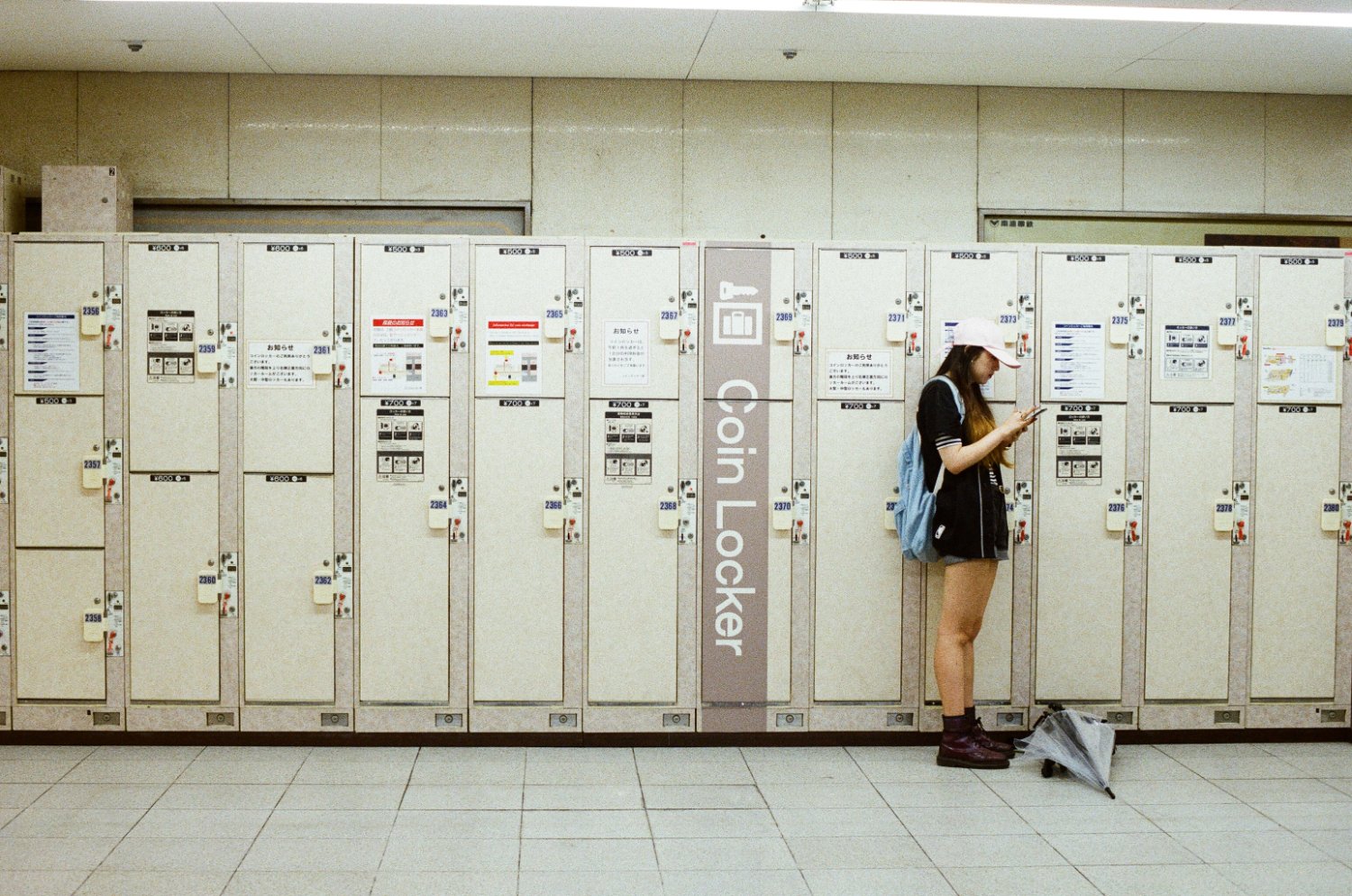
Coin lockers are everywhere in stations, in three rough sizes, typically ¥400–800 per day. They fill up fast in Akihabara, Nakano and Shinjuku on weekends. Most now accept IC cards like Suica, which is easier than hunting for ¥100 coins.
Two things that save a day of shopping: most hotels will hold your bags before check-in and after check-out for free, and department stores will usually hold purchases at their service counter until you’re ready to leave.
A shopping day that actually works
- Leave your big bag at the hotel or in a station locker first thing.
- Carry your passport — you can’t claim tax-free without it.
- Carry more cash than feels necessary. Many second-hand and independent shops are cash-only, and from November you’re paying tax up front.
- Keep all receipts together in one envelope. You’ll need them at the airport.
- If the bags get heavy mid-afternoon, drop them back at the hotel and go out again rather than lugging them around.
- Ship the overflow from a post office a day or two before you fly, rather than on departure morning.
- Clear customs before you check your bags in, not after. Once the suitcase is gone, so is the refund.
- Keep each tax-free receipt intact. Everything listed on it has to be with you at the airport.
- Decide per item whether to claim or to ship. You cannot do both with the same purchase.
Planning which shops to hit? Our route and budget planner estimates your shopping spend alongside transport and lodging, so you can see the real total before you go. And if you’re deciding where to base yourself, our Tokyo accommodation guide is organised by what you’re shopping for.
First trip to Japan? Sort the boring parts first — our visa, trains and SIM card guide covers what you need before you can shop at all.

Comments