You are not really choosing a hotel. You are choosing which district you can walk back to at six in the evening carrying a bag of records, and which one you can leave at nine in the morning without a train change. Everything else — the breakfast, the lobby, the view — matters less than that, because on a shopping trip the hotel is a locker with a bed in it.
This guide only lists places we could verify on the hotel’s own site. Where a hotel does not publish something — a rate, a room size, a walking time — we say so rather than borrowing a number from a booking site. That means some districts get fewer entries than you might expect, and one district gets almost none.
- What a Tokyo room actually costs in 2026
- The accommodation tax: 3% starts in April 2027, not now
- Nakano: the district with almost no hotels
- Koenji and Shimokitazawa: four real options between them
- Akihabara and Ueno: where the hotels actually are
- Ikebukuro: the one hotel actually built for this
- What the listing sites get wrong
- Before you book
- Which one, in one line each
- Working out the rest of the budget
What a Tokyo room actually costs in 2026
Tokyo runs fuller than anywhere else in Japan. The Japan Tourism Agency’s confirmed figures for 2025, published on 6 July 2026, put Tokyo’s room occupancy at 76.3% against a national 61.6%. The second preliminary figures for May 2026 put Tokyo at 77.9%, first in the country. Practically, that means the cheap rooms go first and the gap between booking eight weeks out and eight days out is large.
One thing worth knowing before you read any other English guide: there is no official Tokyo average room rate. The Tourism Agency’s accommodation survey collects guest nights and occupancy, not prices. Every “Tokyo ADR is ¥X” figure you have read comes from a private research firm, not from a government statistic. The nearest official signal is the Statistics Bureau’s consumer price index for the Tokyo wards, where the August 2026 preliminary release records lodging as pulling the overall index down by 0.04 points year on year — so rates are not running away from you right now.
Of the twelve hotels below, exactly one publishes a rate card at all. The rest send you to a booking engine with your dates in it. That is normal in Japan and it is why price comparison for Tokyo has to be done on dates, not on averages. Klook’s Tokyo hotel listings show what the same nights cost on a booking platform, which is the only practical way to compare when the hotel itself will not quote you a rate.
The accommodation tax: 3% starts in April 2027, not now
This is the single thing English guides are getting wrong in 2026, and it is worth being precise about.
Right now, and for the rest of 2026, Tokyo’s accommodation tax is a flat charge. Nothing under ¥10,000 per person per night. ¥100 between ¥10,000 and ¥15,000. ¥200 at ¥15,000 and above. That structure has been in place since 1 October 2002 and has not changed.
The 3% rate is real, but it takes effect on 1 April 2027. The Tokyo Metropolitan Assembly passed the revision on 27 March 2026 and the Minister for Internal Affairs and Communications gave consent on 30 June 2026 — which is why a wave of “Tokyo raises hotel tax to 3%” articles appeared in mid-2026 and why so many of them omit the start date. From April 2027 the tax becomes 3% of the room rate, the exemption line moves to ¥13,000, and simple lodgings and licensed minpaku come into scope for the first time. If you are travelling before then, none of that applies to you.
The second mistake is the exemption line itself. The ¥10,000 threshold is the room charge before consumption tax and before meals. Tokyo’s own guidance excludes food and drink, consumption tax, bathing tax and tips from the figure, while including bedding, heating and service charges. So a room advertised at ¥10,800 tax-included with breakfast can fall under the line once breakfast and the 10% are stripped out. Reading the tax-inclusive headline number and assuming you will be charged is the wrong way round.
One piece of good news: Tokyo charges this once. Unlike Kyoto, where a city tax sits on top, the Ministry of Internal Affairs and Communications list of non-statutory local taxes — current as of January 2025 — shows no ward or municipal accommodation tax anywhere inside Tokyo. You pay the metropolitan tax and nothing else.
Hot spring hotels add a second, separate tax
If your hotel has a real hot spring — not a large communal bath, an actual onsen — a bathing tax applies on top. It is a ward-level tax, so the exact figure is set locally, but ¥150 per person per night is the standard national rate and the figure Minato and Toshima wards publish. Each ward sets its own by by-law, so check the bill rather than assuming. Children under twelve are exempt. The ¥1,200 day-visitor exemption you may read about does not help you: it applies to day bathers, not to overnight guests.
Three hotels in this guide trigger it — Yuen Bettei Daita in Shimokitazawa, and the two Super Hotel Premier properties in Akihabara and Ikebukuro. It is a small amount, but it appears on the bill as a line you did not expect and it is not part of the room rate you compared.
Nakano: the district with almost no hotels
This is the awkward one. Nakano Broadway is the densest collectibles building in Tokyo, and there is essentially nowhere to sleep next to it.
We checked the official branch lists. Toyoko Inn’s own list has no hotel in Nakano ward at all. Sotetsu Hotels has 24 in Tokyo and none. Hotel Livemax has 45 and none. That is not an oversight in the guides; the chains genuinely are not there.
Worse, the places English guides still list are gone. Nakano Sunplaza, which had a hotel in it, closed on 2 July 2023 and the site is under redevelopment — the ward’s own bulletin marked the end of its fifty years. YADOYA Guesthouse closed on 30 April 2020; its operator says so in plain English on its own site, and the building is now a share house. And “Hotel Route-Inn Nakano”, which turns up in searches, is in Nagano prefecture, not Nakano ward. Three of the most-listed Nakano options are a demolition site, a share house and a hotel three hours away.
What actually exists is Business Hotel Crescent, at 3-3-4 Nakano. It is ten minutes’ walk from Nakano station and six from Higashi-Koenji, and about fifteen minutes on foot from Nakano Broadway — this is not a hotel at the shops, whatever a listing tells you. It is the one hotel in this guide that publishes prices: from ¥6,300 including tax for a compact single, ¥8,400 for a semi-double, tax-inclusive and varying by day of the week. Two things to know before booking. The front desk hours are genuinely unclear: the hotel’s own site says three different things across three pages — 08:30 to 14:00 the following day, nobody present between 10:00 and 13:00, and, elsewhere, a 24-hour desk. We could not resolve it from the official pages, so if you are arriving late, phone and confirm before you book. Second, there is no laundry in the building, though there is a coin laundry a minute away. Check-out is 10:00 on weekdays and 12:00 at weekends.
Our honest recommendation for Nakano is not to stay in Nakano. Sleep in Koenji or Shinjuku and take the Chuo line. It is one stop, and you get a real choice of rooms.
Koenji and Shimokitazawa: four real options between them
Both of these districts have the same problem as Nakano and a better answer. Sotetsu has no hotel in either. MIMARU has none in either. JR-East Hotel Mets has one, in Koenji. The independents are what you actually book.
- JR-East Hotel Mets Koenji — 2-5-1 Koenji-Kita, Suginami. One minute from the north exit, which puts you at the top of the Koenji vintage streets. Check-in 15:00, out 11:00. Coin laundry that takes IC cards and QR payment as well as cash, and a cloakroom that holds bags until midnight on your departure day. The official English page puts Shinjuku about nine minutes away. Note that the desk runs on a self check-in machine with remote staff — the site does not claim a 24-hour human presence.
- Hotel Ark Tower Koenji — 2-4-3 Koenji-Kita, on the north exit roundabout. Forty rooms — 38 singles and 2 twins — and the singles take a full double bed (1,950 × 1,400mm), which is unusual at this size. Sixteen of the forty are smoking rooms, both twins included. Check-in 15:00, out 11:00. No breakfast and no parking, including no affiliated car park — the hotel says so itself.
- Yuen Bettei Daita — 2-31-26 Daita, Setagaya. Thirty seconds from Setagaya-Daita station and eight minutes on foot from Shimokitazawa. This is the outlier in the guide: a proper ryokan with a hot spring bath and sauna supplied from Ashinoko in Hakone, rooms from 19㎡ to 51㎡, and no parking. It is the one place here you would book for its own sake rather than for its location, and it is a ten-minute walk from the Shimokitazawa record shops.
- illi Sun Shimokitazawa — 2-24-12 Kitazawa, one minute from the station. Four apartment units of roughly 48–50㎡, each with a full washer-dryer and a kitchen. Check-in 16:00, out 10:00, and no staff on site — check-in, payment and entry are all online. If you are buying vintage clothing by the kilo, being able to wash it before it goes in your case is worth more than a lobby.
If none of those work, stay near Shinjuku and commute. Odakyu’s own global site says Shinjuku to Shimokitazawa is a ten-minute ride; the Tokyo Metropolitan Government’s tourism site says seven. Two official sources disagree, which tells you it is short enough that the difference does not matter.
Akihabara and Ueno: where the hotels actually are
After the thin pickings west of Shinjuku, Akihabara is a relief. This is the one part of the city where the hotel supply matches the shopping.
- Remm Akihabara — 1-6-5 Kanda-Sakumacho, Chiyoda. Directly connected to the JR central gate and the Tsukuba Express station, and the only hotel in this entire guide whose official site states the distance to the shopping district: about two minutes to Denki-gai. Check-in 14:00 and check-out 12:00, an hour longer at each end than everyone else — a genuinely useful extra morning. Coin laundry on the 7th floor, open 24 hours, ¥700 a wash-and-dry. All 259 rooms non-smoking. The catch: 218 of them are semi-doubles with a shower booth and no bathtub.
- JR-East Hotel Mets Premier Akihabara — 1-17-4 Sotokanda. One minute from the Denki-gai south exit. Check-in 15:00, out 11:00. This is the one to pick if the desk matters: it publishes a third-floor coin laundry and luggage storage, and the rooms have proper washing-area bathrooms rather than a moulded unit. Like its sister hotel in Koenji it advertises a self check-in machine and does not state that the desk is staffed overnight, so confirm if you are landing late.
- Super Hotel Premier Akihabara — 2-25-8 Kanda-Sudacho, four minutes out. A natural hot spring bath (“Oku-Yugawara no Yu”, 15:00–09:30) and a coin laundry. Check-out is 10:00, the earliest here — fine if you are going straight back to the shops, awkward if you wanted a slow morning.
- MIMARU Tokyo Ueno East — 4-26-3 Higashi-Ueno, Taito. Three minutes from Ueno’s Iriya exit, five from the Ginza line. Every room has a kitchen and a dining table, from 38㎡ up to 78㎡ for the connecting rooms, which is the practical choice if you are travelling as a group and want somewhere to spread out the day’s finds. Luggage held free 07:00–22:00 on arrival and departure days, ¥500 per bag outside that. It is also the only hotel here that explicitly states English capability — non-Japanese staff plus a translation app. Ten minutes from Ameyoko.
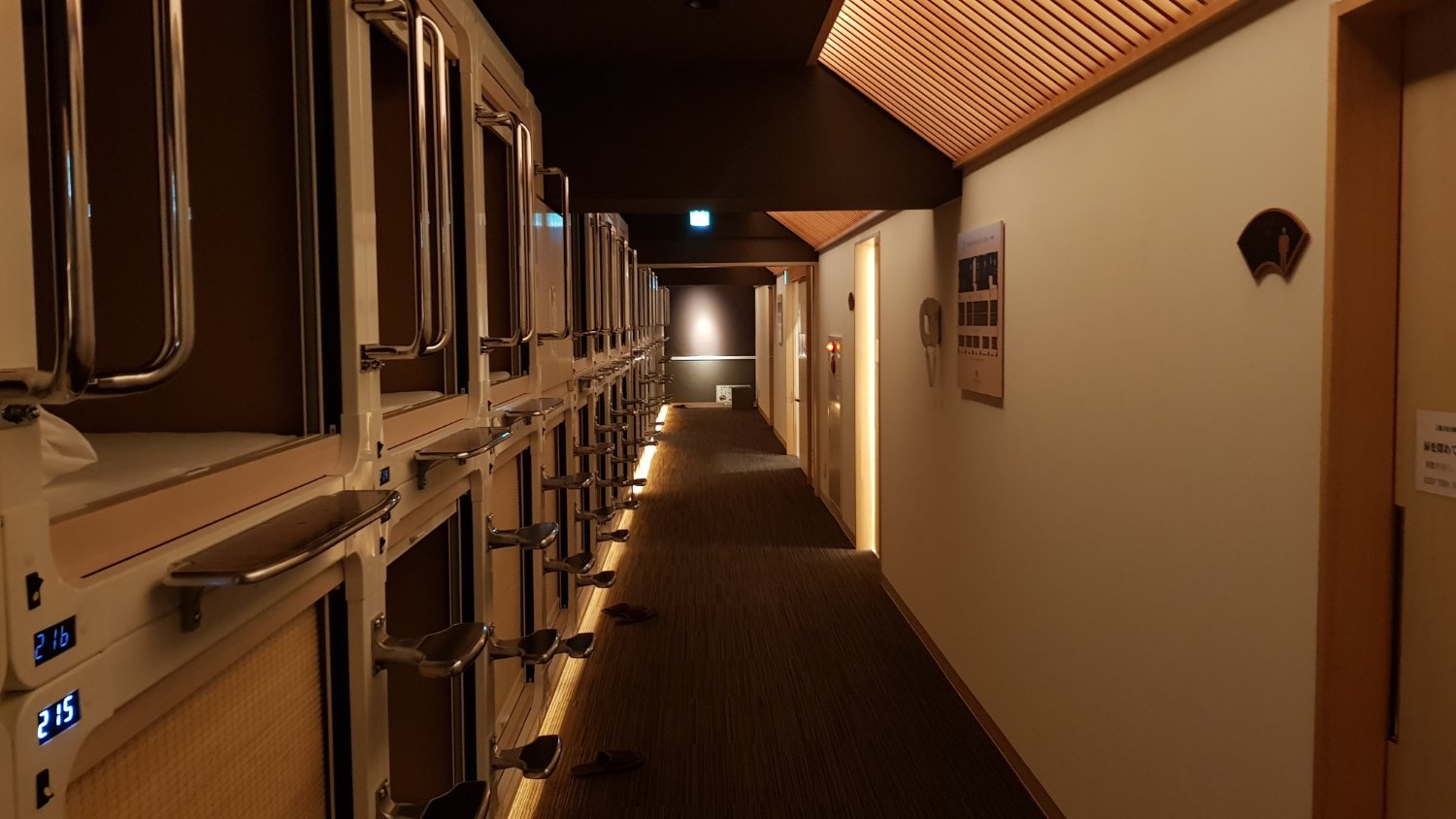
- Anshin Oyado Tokyo Man Akihabara Denki-gai — 1-2-12 Sotokanda, two minutes from the Denki-gai exit. Artificial hot spring bath, mist sauna, coin laundry, 24-hour desk, and a 12:00 check-in with a 12:00 check-out that lets you hold a room for a full 24 hours. It is men-only and single-occupancy, so it is not an option for everyone — but if it fits you, it is the cheapest way to be that close to the shops.
Ikebukuro: the one hotel actually built for this
If your trip is centred on Otome Road, the decision is close to made for you.
Sunshine City Prince Hotel, 3-1-5 Higashi-Ikebukuro, is connected directly to Sunshine City, and its own access page states about three minutes on foot to Otome Road — the only hotel we found that names the street at all. It also has an anime floor, IKEPRI 25, a comic room holding around 3,000 volumes and a separate BL comic room of around 1,000. Check-in 15:00, out 11:00. The coin laundry runs 24 hours and takes cash, QR and cards. Rooms run from 16.6㎡ up to 75㎡. One trap: the self check-in machines stop working after 22:00, so a late arrival means the desk.
- KOKO Hotel Ikebukuro East — 3-10-7 Higashi-Ikebukuro. Eight minutes from Ikebukuro station, three from Sunshine City. 24-hour front desk, free luggage storage, paid coin laundry, all rooms non-smoking at 13㎡. This hotel changed its name on 17 November 2025 — it was Hotel Wing International Ikebukuro — so any guide still using the old name is at least that far out of date. Its neighbour rebranded separately, on 13 February 2026; the two dates belong to two different buildings.
- Read that one carefully: there is a second KOKO Hotel Ikebukuro at 3-7-1 Higashi-Ikebukuro, one minute away — a different building, formerly Hotel Wing International Select Ikebukuro, which rebranded on 13 February 2026. Check the street number on your confirmation, not the name.
- Super Hotel Premier Ikebukuro Natural Hot Spring — 2-64-6 Ikebukuro, five minutes from the west exit. Men’s and women’s hot spring baths, 15:00–09:30. Check-in closes at 24:00 and check-out is 10:00. Luggage is held on the day only, which matters if you land early.
- Toyoko Inn Ikebukuro Kita-guchi No.1 — 2-50-5 Ikebukuro, four minutes from exit 20a. Check-in 15:00, out 10:00, free buffet breakfast 06:30–09:00, coin laundry, self-service lockers for luggage. Takes PayPay, Alipay and WeChat Pay as well as cards. The plain, predictable option.
What the listing sites get wrong
- “Tokyo’s hotel tax is now 3%.” It is not, until 1 April 2027. Through 2026 it is the flat ¥100 / ¥200 structure.
- “The tax kicks in above ¥10,000 including tax.” The threshold is the room charge excluding consumption tax and meals.
- Nakano Sunplaza listed as a hotel. Closed 2 July 2023.
- YADOYA Guesthouse listed as open. Closed 30 April 2020, now a share house.
- “Hotel Route-Inn Nakano.” That is Nagano prefecture.
- “Hotel Wing International Ikebukuro.” Renamed KOKO Hotel Ikebukuro East on 17 November 2025. The Select branch next door became KOKO Hotel Ikebukuro on 13 February 2026 — two buildings, two dates, and most guides merge them.
- “Sakura Hotel Hatagaya is a fifteen-minute walk from Shimokitazawa.” The hotel’s own site never mentions Shimokitazawa; it is about 2km away and the hotel describes itself by its Keio New Line station instead.
- “Yuen Bettei Tokyo Daita.” The official name is Yuen Bettei Daita.
- “All foreign guests must show a passport.” The rule covers foreign nationals without an address in Japan. Foreign residents holding a residence card are not in scope.
- Branches that do not exist. Sotetsu Fresa Inn has nothing in Koenji, Shimokitazawa or Akihabara. MIMARU has nothing in Akihabara, Shimokitazawa or Koenji. Check the chain’s own branch list before you trust a “nearest branch” claim.
Before you book
Your passport comes out at the desk
Under the Hotel Business Act’s enforcement regulations, a hotel must record the nationality and passport number of any guest who is a foreign national without an address in Japan, and keep that register for three years. In practice the desk will ask for the passport and take a copy. If you are a resident of Japan with a residence card, this does not apply to you. Keep the passport in your hand luggage, not the checked bag.
For licensed private lodging the rule is stricter: identity has to be confirmed before the stay begins, either in person or by video where the guest’s face and passport are both clearly visible. That is why even a keyless, staffless minpaku will still make you photograph your passport.
What the price on the screen includes
Japan requires tax-inclusive display, so the figure you are quoted is the room plus 10% consumption tax. The accommodation tax and, where it applies, the bathing tax sit outside that and are usually collected at the property. Two or three hundred yen a night is not going to change your plans, but it does mean the number on your card is not the number you booked.
If you are looking at a minpaku
Licensed private lodging is capped at 180 nights a year, counted from noon on 1 April, and most Tokyo wards add their own restrictions on top — which is why the same listing can be unbookable midweek and available at weekends. The operator is legally required to display a notice with its registration number at the entrance, so if a listing does not show a number, ask before you book.
One trap worth knowing: Ota ward runs a different scheme, the special-zone minpaku, which has no 180-night cap but does impose a minimum stay of two nights. Ota is where Haneda is. If you are trying to book a single night near the airport before an early flight, that is why the good-looking listings will not take your dates.
Which one, in one line each
- Closest to the shops: Remm Akihabara — two minutes to Denki-gai, and check-out at noon.
- Best for Otome Road: Sunshine City Prince — three minutes, plus a BL comic library in the building.
- Best for vintage: Mets Koenji for the location, illi Sun Shimokitazawa if you need to wash what you buy.
- Best desk if you land late: KOKO Hotel Ikebukuro East — it is the one hotel here that states a 24-hour front desk in writing.
- Best for a group: MIMARU Ueno East — from 38㎡, with a kitchen in every room.
- Cheapest with published prices: Business Hotel Crescent, Nakano — from ¥6,300, but read the front desk hours first.
- Worth it for its own sake: Yuen Bettei Daita — a Hakone hot spring eight minutes from Shimokitazawa.
Working out the rest of the budget
The room is the easy number. What catches people out is the shopping, and from November 2026 the mechanics of that change — see the tax-free changes for what you will be paying at the till and reclaiming at the airport. For everything else, what things actually cost in 2026 has the day-to-day figures. Once the shopping days are fixed, check Tokyo hotel prices for your dates — rates in Tokyo move week to week, and the districts in this guide are not priced the same.
One practical note on arrival: almost every hotel here now expects an online check-in or a code, and several have no staffed desk at all. Getting online at the airport rather than at the hotel makes the first evening much simpler — a prepaid Japanese eSIM activates before you land and costs less than a night’s accommodation tax will from 2027.