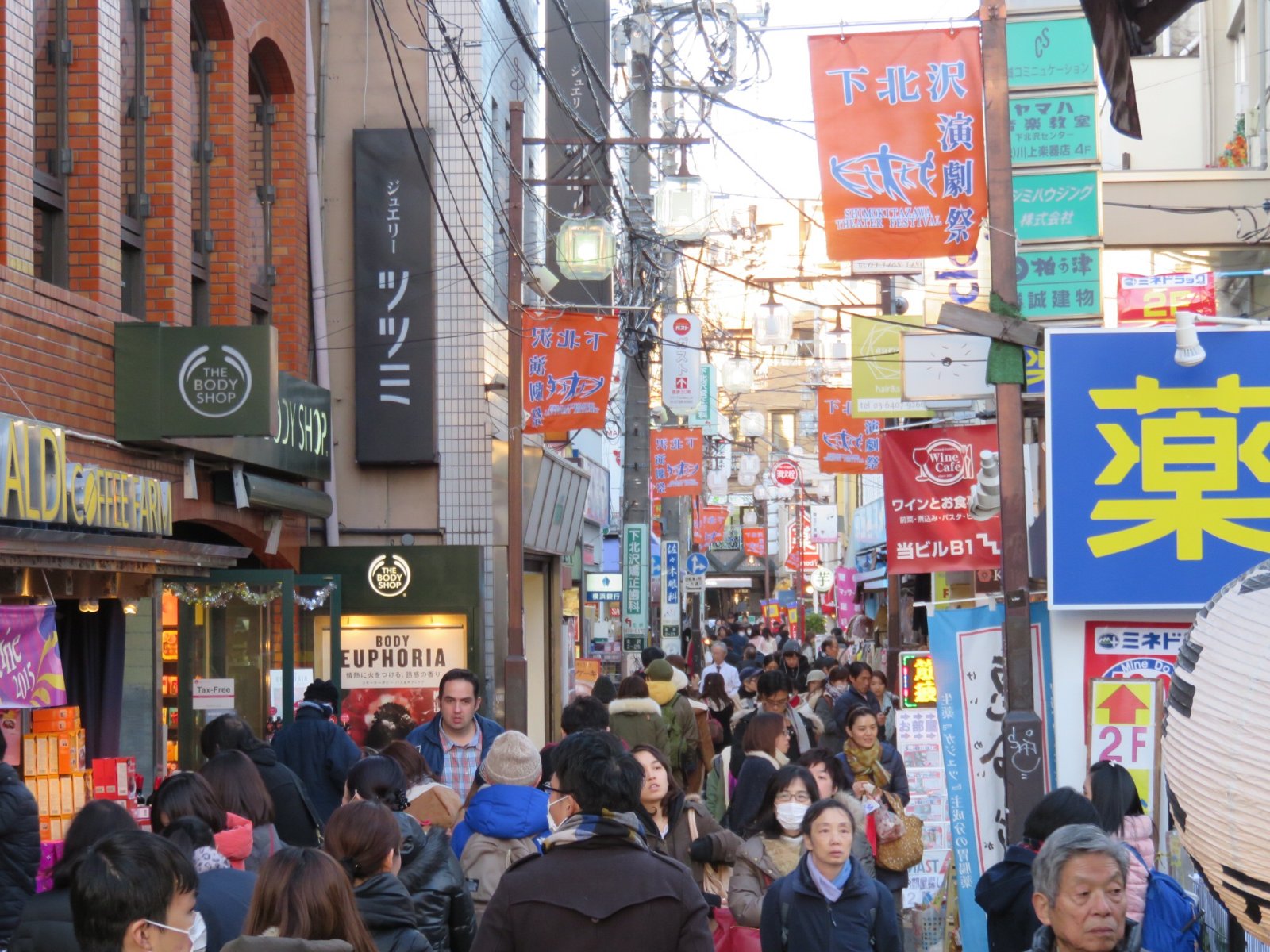
Shimokitazawa, a few minutes from both Shibuya and Shinjuku, is Tokyo’s biggest concentration of secondhand and vintage clothing shops — by some estimates around 150 stores within a 200-meter radius of the station. It’s more polished than Koenji, with more curated racks and higher average prices, but still has plenty of bargain bins mixed in among the boutiques. Here’s where to start.
Last checked 9 August 2026. Every shop below was still listed as trading when we checked, and New York Joe Exchange was posting new stock the day before. For the others we are going on the shops’ own listings rather than same-week confirmation, so hours in particular may be out of date — check before making a special trip. Note that the Chicago chain closed its Harajuku head store for redevelopment; the Shimokitazawa branch below is unaffected.
What changed in Shimokitazawa recently
If you researched this neighbourhood before your trip, you probably read about Toyo Hyakkaten — the basement warren of around twenty independent vintage and junk stalls that ran for 22 years. It closed on 30 March 2025. The building had aged badly and the area around the station has been redeveloped heavily. If a guide still sends you there, that guide is out of date.
Some of its tenants moved rather than closed. Kuroneko Marine (remade vintage) and Sonora Vintage (antique odds and ends) both reopened at 2-31-3 Kitazawa, in the Shimoki-ta-Mariba building, open 12:00–20:00. A separate branch, Toyo Hyakkaten Bekkan, trades inside the Mikan Shimokita complex next to the station and is reported to still be open, though we have not confirmed its current hours.
One more that guides still list: Haight & Ashbury, three minutes from the north exit, closed on 11 November 2022 after about thirty years. That one was not redevelopment — the owner decided to stop. The red high-heel sculpture outside went with it, so if you are using it as a landmark, it is not there.
1. Chicago (Shimokitazawa)
The Shimokitazawa branch is the largest of this long-running chain: a big, classic American-style thrift store packed with quality used clothing at low prices, including what’s said to be the neighborhood’s biggest selection of imported secondhand Hawaiian shirts.
Shellbo Shimokitazawa Bldg., 5-32-5 Daizawa · about 3 minutes from Shimokitazawa Station · 11:00–20:00 · open every day except 1 January
One thing about Shimokitazawa that changes how you shop it: the stock is single pieces and it turns over fast, so almost nothing you see is repeatable. Come back next week and the rail is different. If you want a sense of what a piece is actually worth before you decide, or you keep thinking about the one you left behind, Buyee bids and buys on Yahoo! Auctions and Mercari Japan on your behalf and forwards the parcel abroad. It is the same second-hand market these shops are competing with.
2. New York Joe Exchange
Housed in a converted old sento (public bathhouse) about five minutes from the station’s north exit, New York Joe Exchange runs on a buy-sell-trade model alongside regular stock, so the selection turns over quickly. On the first Sunday of every month, everything in the store is half price.
3-26-4 Kitazawa, in a converted bathhouse · about 5 minutes from Shimokitazawa Station · 12:00–20:00 · buy-and-sell counter, so stock turns over fast
3. Kinji Used Clothing (Shimokitazawa)
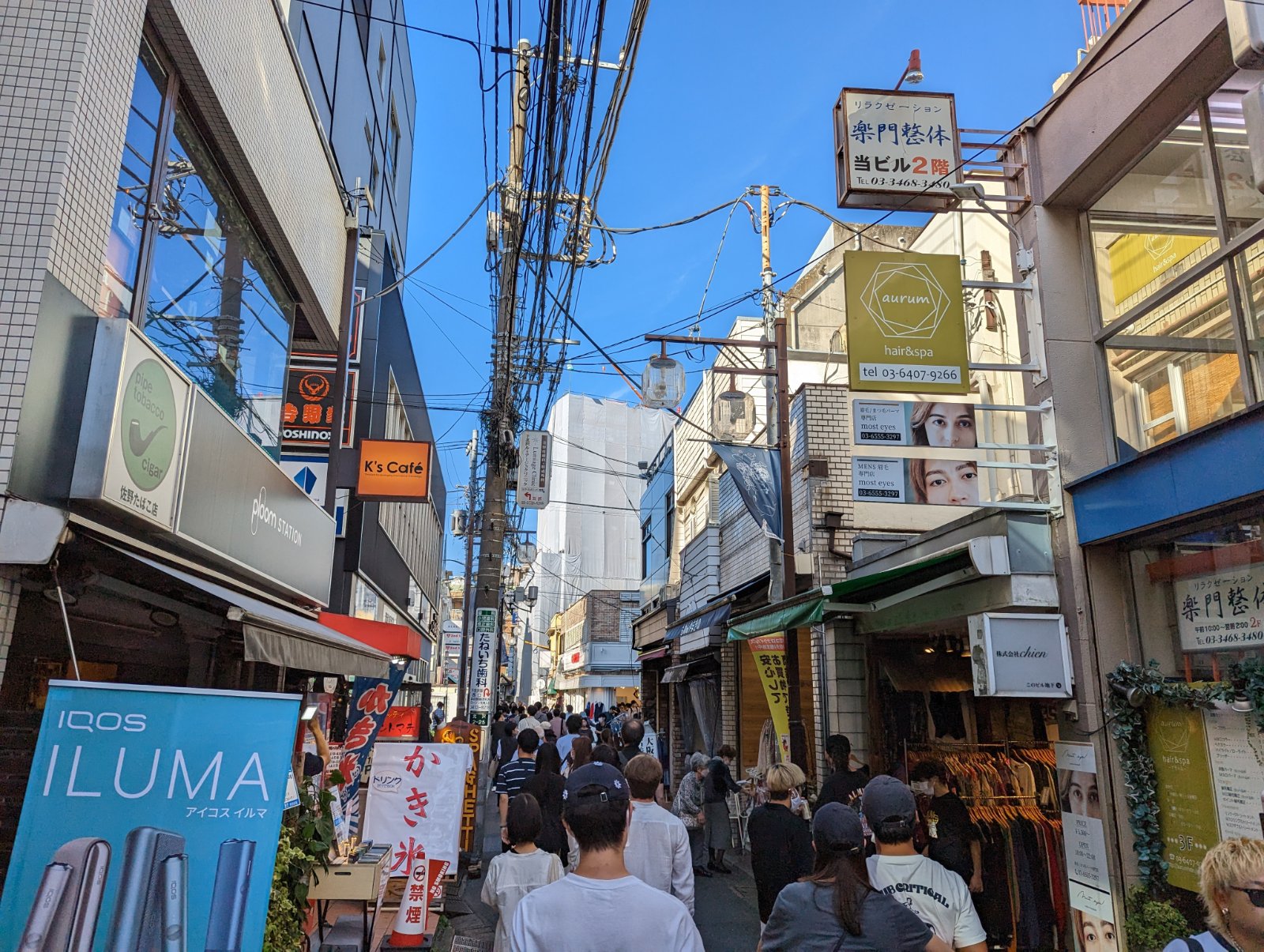
Kinji has multiple Tokyo locations (including two in Harajuku), and the Shimokitazawa branch is one of the most popular for its sheer volume of used and vintage clothing across a wide range of styles and eras — a good stop if you want to dig rather than browse a tightly curated rack.
FABULOUS Shimokitazawa Bldg., 2-13-11 Kitazawa · about 2 minutes from Shimokitazawa Station · 11:00–20:00 · the buyback counter closes at 19:00
4. Big Time
A two-floor store tucked in an alley off Kamakura-dori, easy to spot by its orange signboard. Big Time is crammed with vintage clothing and accessories from the 1950s through the 1990s, plus bags, bandanas, and other odds and ends.
2-26-15 Kitazawa — menswear on 1F, womenswear on 2F · about 2 minutes from Shimokitazawa Station (west side) · Mon–Fri 11:00–20:00, weekends and holidays 11:00–21:00
Opened since 2025
Shimokitazawa turns over faster than most English-language guides keep up with. These four all opened after the last wave of them was written.
NOTIME Shimokitazawa
The most useful new opening for a traveller, and not because of the stock. NOTIME is staffed by day and switches to unstaffed self-service overnight, so you let yourself in with a QR code and shop at three in the morning. If you have just landed and your body clock is eight hours out, this is the one vintage shop in Tokyo that will have you. Stock leans men’s and street: band tees, movie tees, the occasional 1970s Adidas track top, and a bin of vintage pins and keyrings around ¥400–500.
Sawadaya Bldg., 2-19-17 Kitazawa · about 1 minute from the station · two floors · staffed from around midday to evening, self-service the rest of the 24 hours. The staffed hours have been quoted differently in different places, so treat the changeover time as approximate.
Furugiya JAM Shimokitazawa Minamiguchi
The Osaka chain’s second Shimokitazawa shop, opened 3 October 2025 in a basement south of the station. It is deliberately the scruffier of the two — dense, cheap and heavy on worn-in American casual — where the original Shimokitazawa branch is bright and tidy. Around 4,300 items.
B1F, Shine Kitazawa Bldg., 2-15-16 Kitazawa · 11:00–20:00
Elulu by JAM Shimokitazawa
Womenswear only, opened 21 November 2025. Around 1,200 pieces, with Burberry and Supreme turning up alongside unbranded stock, in a bright gallery-like room that looks nothing like a traditional vintage shop. If you find most Shimokitazawa shops overwhelming, start here.
1F, Shin Dai-2 Matsuya Bldg., 2-12-4 Kitazawa · 11:00–20:00
Circulable Supply
Opened April 2025 and run by Baycrew’s, a mainstream Japanese apparel group, which makes it the odd one out here. Expect 1,500–2,000 pieces rotated seasonally, weighted towards luxury labels, Japanese designers and cleaner streetwear rather than thrift-bin finds. Prices reflect that.
1F, 5-30-2 Daizawa · confirm the exact address before a long detour, as English listings vary
Why the shops are strung out along a former railway
Shimokitazawa does not have a vintage street. It has a vintage line, and understanding why saves you a lot of aimless walking.
The Odakyu line through Shimokitazawa went underground after the last train on 22 March 2013, and the wider quadruple-tracking works finished in March 2018. That freed up 1.7 kilometres of former track bed running through the middle of the neighbourhood, which was developed as a chain of thirteen separate areas and finished opening in May 2022. Shops that would once have competed for a spot near the station are now spread along that strip.
The two parts worth walking are Bonus Track, which opened on 1 April 2020 — five low buildings and about fourteen tenants including a vintage shop and a record shop, built around a courtyard rather than a corridor — and reload, from 16 June 2021, a white block of twenty-four small units between Shimokitazawa and Higashi-Kitazawa with a vintage and used tenant on the first floor up.
One correction, because almost every English guide gets it wrong: Mikan Shimokita is not part of that development. It sits under the Keio Inokashira line viaduct, was built by Keio rather than Odakyu, and opened on 30 March 2022 as an entirely separate project. Guides that lump it in with the track-bed developments give you a mental map that does not match the ground — they are on different sides of the station, under different railways.
Nothing independent opens at ten
Chicago is the shop to build a morning around: 11:00 to 20:00, every day of the year except 1 January. Toyo Hyakkaten Bekkan inside Mikan keeps the same 11:00–20:00. Those are your options before midday.
The independents run later, and the spread is wide. Twelve is early for them; thirteen is the norm; a few do not open until fourteen. They mostly close at 20:00 regardless of when they started, so the later the opening, the shorter the day.
The one counter-intuitive detail worth knowing: several Shimokitazawa shops open an hour earlier at weekends than on weekdays — a 13:00 or 14:00 weekday opening becomes 12:00 on Saturday and Sunday. That is the opposite of what you would expect, and it makes a weekend visit genuinely longer rather than just busier.
Practical notes before you dig
Sizing. Domestic secondhand is cut to Japanese sizing, which generally runs smaller than the US or EU equivalent for the same letter on the tag. Imported American stock is not. Assume nothing and try things on.
Payment. Card acceptance has improved a lot, but the smallest shops can still be cash-only. Carry some.
Tax-free rarely applies here. Duty-free shopping requires the shop to be a registered tax-free retailer and a minimum spend, and most independent secondhand shops are neither registered nor selling you ¥5,000 in one go. Do not budget around a refund you are unlikely to get — and note that the whole tax-free system changes on 1 November 2026.
Everything is sold as-is. Secondhand shops in Japan generally do not take returns. Check seams, cuffs and armpits under the light before you commit.
If you get home and regret the jacket you put back — or you never make it to Tokyo at all — most Japanese secondhand marketplaces do not ship overseas directly, but a proxy service will buy on your behalf and forward the parcel. Buyee is the one we use for this.
Doing more than one neighbourhood? Koenji is cheaper and scruffier, and our neighbourhood-by-neighbourhood guide compares them all.
If Shimokitazawa is your base, Kichijoji is fifteen minutes away on the same Inokashira line and works as a half-day extension rather than a separate trip: fewer shops, thinner crowds, and — unusually for vintage — two of its four are registered tax-free. See our Kichijoji vintage clothing guide.
Getting your bearings
Shimokitazawa Station is served by the Odakyu Line (about 7-10 minutes from Shinjuku) and the Keio Inokashira Line (about 5-6 minutes from Shibuya); all train types stop here on both lines. Because the two lines are run by different companies, they use separate entrances and ticket gates, so it’s worth checking which exit you need before you arrive. Most of the shopping streets fan out from both the north and south sides of the station — expect to cover a lot of ground on foot, and budget more time than you think you’ll need.
Planning to combine this with other stops? Our route and budget planner tool can help you work out an order and a rough budget.