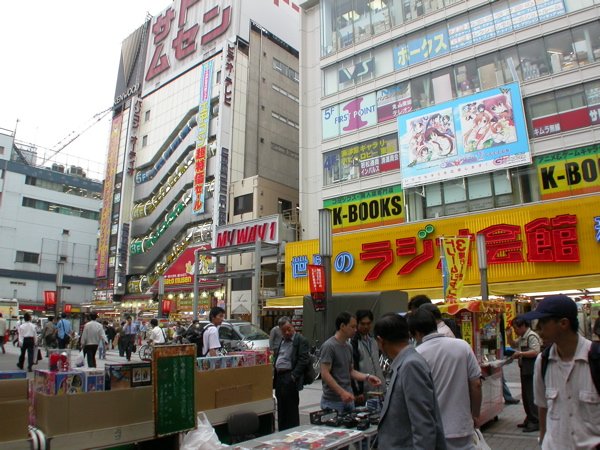
Akihabara — “Akiba” to regulars — is Tokyo’s densest concentration of otaku culture, packed into a few blocks around Electric Town. Anime and manga goods, figures, retro games, doujinshi, maid cafes and gachapon fill multi-floor buildings that reward vertical exploration: the best finds are rarely on the ground floor.
This hub pulls together our Akihabara guides by interest, so you can plan a day around what you actually care about. Each guide covers specific shops with what to expect and how to shop them.
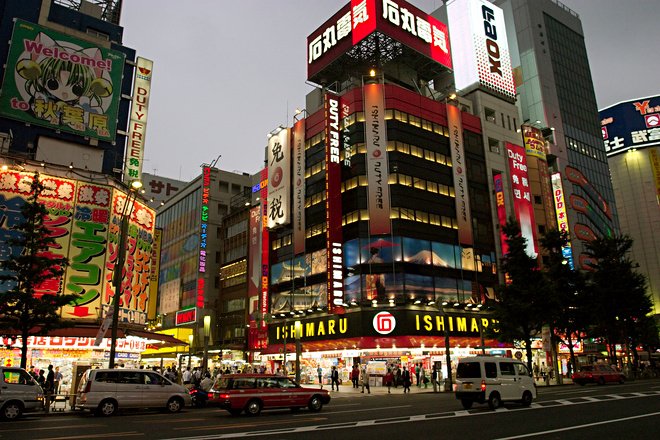 Anime & Manga GoodsFigures, character goods and the flagship otaku stores of Electric Town.
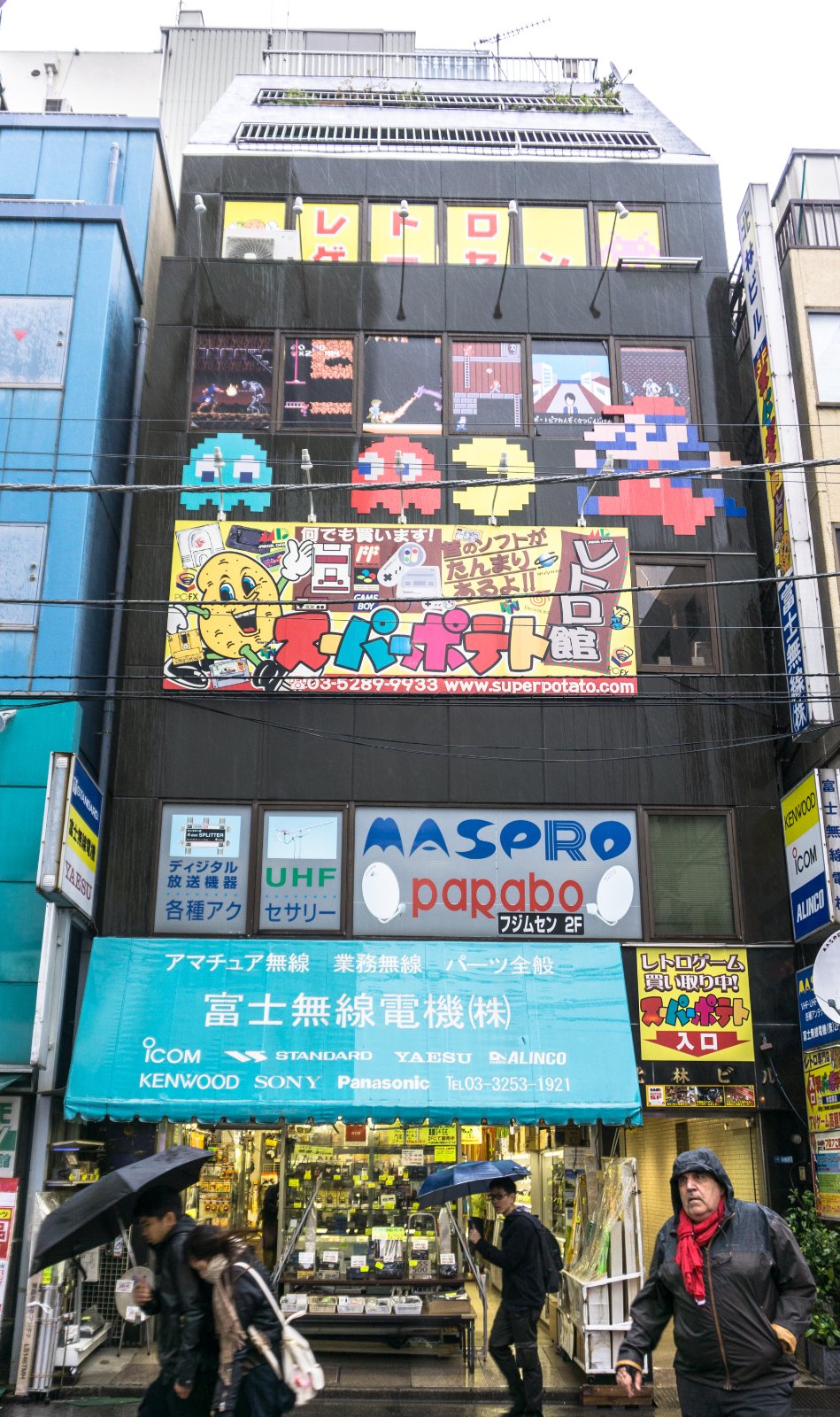 Retro Games & ArcadesClassic consoles, cartridges and the shops where collectors hunt them.
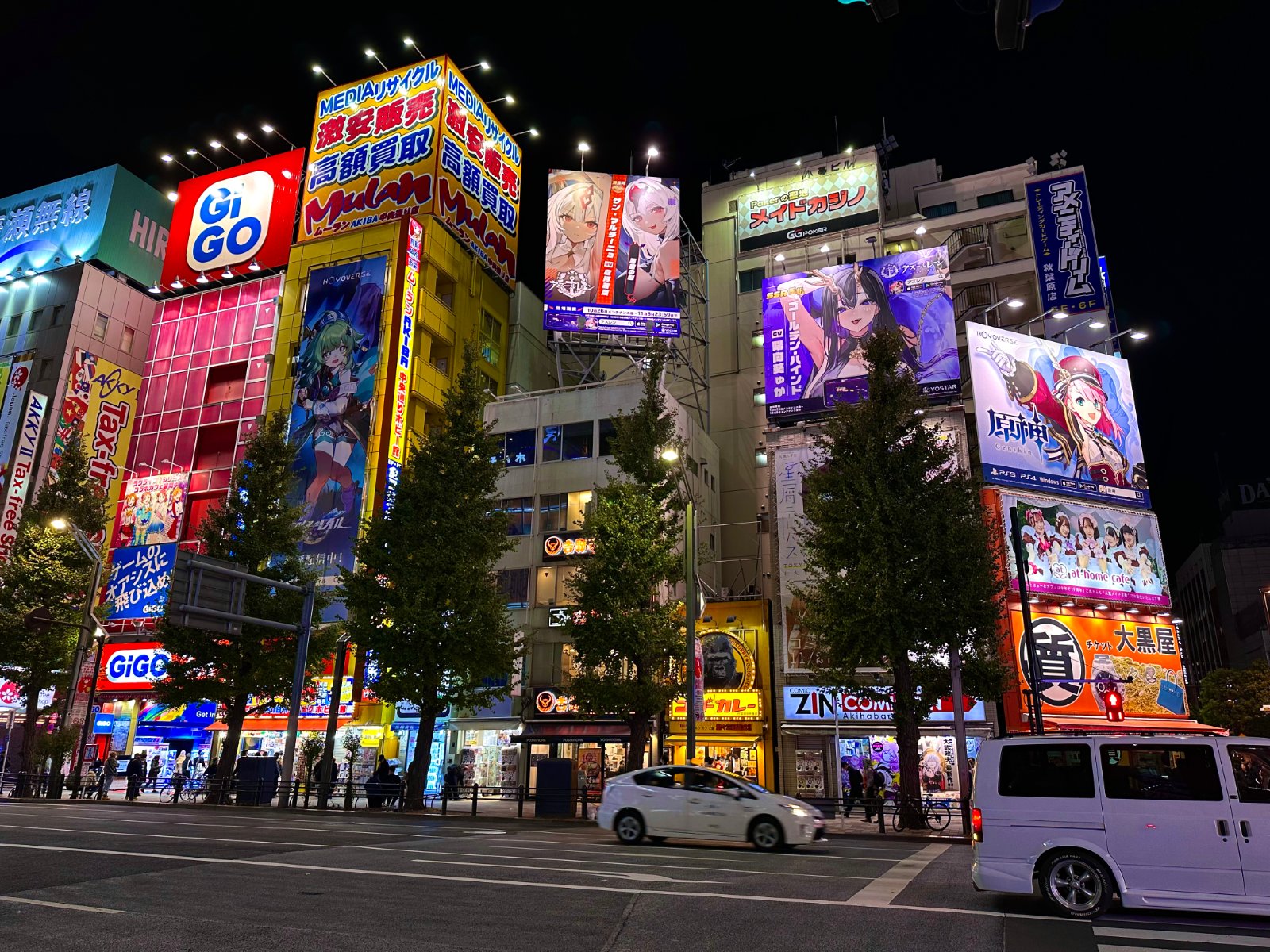 Maid & Theme CafesHow the cafes work, what to expect, and four worth your time.
 Doujinshi & ZinesSelf-published manga and deep cuts beyond the mainstream shelves.
Information in this guide is accurate as of August 2026.
- Akiba is a vertical city, and that is the whole trick
- The district runs on two different clocks
- Your guidebook is describing a district that closed
- Sunday afternoon is the only time the street itself is the attraction
- Three things that catch people out
- Where to put your bags
- Plan a route between them
- Nearby & related
Akiba is a vertical city, and that is the whole trick
Most Tokyo shopping districts spread sideways. Akihabara stacks. The single most useful habit you can build here is to stop reading shopfronts and start reading the vertical signboards bolted to the side of every building, because the ground floor almost never tells you what is inside.
There are three patterns, and once you can tell them apart the district stops feeling random.
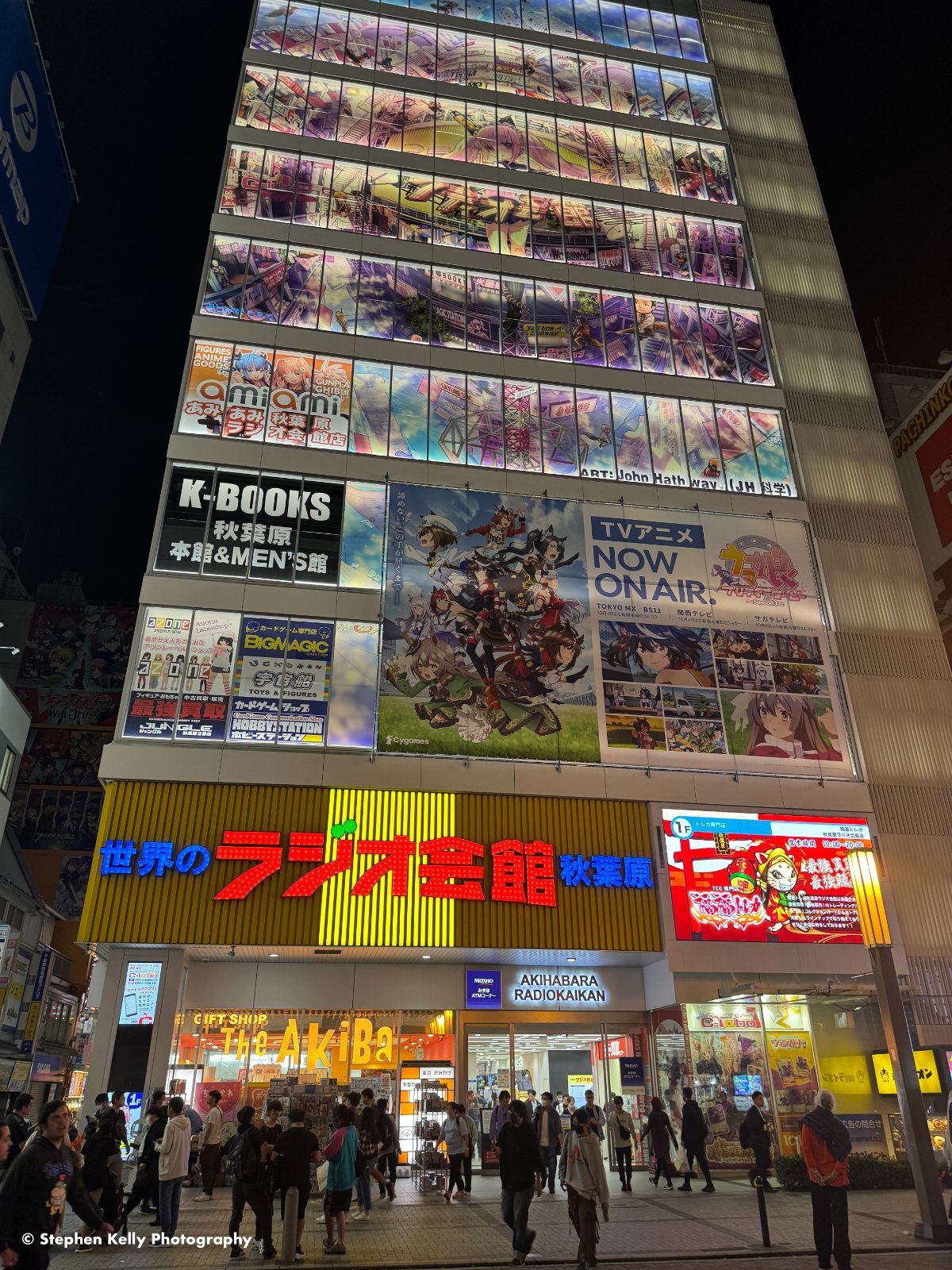
One building, completely unrelated tenants. Akihabara Radio Kaikan runs B1 to 10F one minute from the station, and the floors have nothing to do with each other: trading cards on 9F, ball-jointed dolls on 8F and 7F, hobby and model kits on 6F, secondhand anime goods on 5F, figures on 4F, more secondhand on 3F, card shops on 2F, an optician and a convenience store on 1F, a beer hall in the basement. Most tenants run 10:00 to 20:00. Ten of them now sell trading cards and only two sell electronics, which is a bigger change than the name of the building suggests — our Akihabara card shop guide goes floor by floor.
One chain, split by genre across floors. Mandarake Complex is eight floors of a single shop divided by what it sells: shonen and vintage manga on 3F, male-oriented doujinshi on 4F, BL and women’s doujinshi on 5F, American toys on 6F, tokusatsu and die-cast on 7F, figures on 8F. Its sibling Mandarake Complex 2 opened on Junk Street in August 2025 with nine more floors — cards, games, CDs and DVDs, micro figures, vehicles, trains. The two buildings are about ten seconds apart, both open 12:00 to 20:00, both open every day of the year. If you walk into the wrong one you have not lost anything except the walk.
Businesses that have no reason to share an address. Don Quijote Akihabara is open 24 hours across B1 to 8F: pachinko in the basement and on the ground floor, an amusement arcade on 6F and 7F, the AKB48 theatre on 8F, a maid cafe and a currency exchange counter somewhere in between. Nothing about the entrance prepares you for that.
The district runs on two different clocks
The clearest example is capsule toys: Bandai’s 800-machine floor inside namco runs 10:00–23:00, while the district’s veteran capsule shop near Suehirocho closes at 20:00 on weekdays and 19:00 on Sundays and holidays. Same product, four hours apart. Our Akihabara gachapon guide has the four addresses.
This is the most practical thing on this page, and almost no English guide gets it right.
The electronics side opens early. Yodobashi Akiba at 9:30. Radio Kaikan, Tokyo Radio Depart and Silk Hat at 10:00. Laox at 10:30.
The secondhand subculture side opens late. Surugaya at 11:00 on weekdays and 10:00 at weekends. Animate and Lashinbang at 11:00. Mandarake, both buildings, at 12:00.
So if you arrive at nine in the morning to beat the crowds, you get an open electronics district and a closed otaku one. The shutters you are standing in front of are the shops you came for. Several English guides still advise arriving at 9:45 because “most shops open at 10” — that is true of parts and camera shops and false of every secondhand shop in this article.
Closing time runs in the same order, staggered. Electronic component stalls shut around 19:00. Radio Kaikan and Mandarake at 20:00. Surugaya and Lashinbang at 21:00. Silk Hat until 24:00. Don Quijote never.
The sequence that falls out of this: start at 10:00 in the parts buildings while the rest is shut, move into secondhand from 12:00, and leave the arcades and Don Quijote for after dark. If you would rather not sequence it yourself, a private three-hour Akihabara walk with a local guide is bookable through Klook.
Your guidebook is describing a district that closed
Akihabara turns over faster than the guides that cover it. These are the landmarks still being printed as current in English-language travel writing, and what actually happened to them.
- The red Sega — later GiGO — tower by the Electric Town exit. Still used as the orientation landmark in guides and on maps. It closed on 31 August 2025 after 33 years. Silk Hat Akihabara opened in the same building on 22 November 2025, nine floors, 10:00 to 24:00. It is white. If you are navigating by “turn at the red building”, you will not find it.
- Toranoana. Gone from Akihabara entirely since 2022. Not moved, not smaller — gone.
- Gundam Cafe. Every branch closed following the November 2021 announcement.
- Akiba-Ichi, the shops and restaurants inside Akihabara UDX. Closed on 23 January 2026 for a full renovation. The operator states reopening in winter 2026 with details to be announced in autumn — as of August 2026 there is no confirmed date. Do not plan a meal around it.
- The old Ishimaru Denki building. Demolished; an empty lot as of February 2026.
- Kadota Musen, a parts shop in Radio Depart for more than half a century, closed on 20 May 2026.
- BEEP left its old building and reopened at SEEKBASE AKI-OKA on 6 June 2026.
What arrived instead, in order: Animate Akihabara Building 1 in April 2023, occupying the space Toranoana left, B1 to 7F. Ecute Akihabara inside the JR station in April 2025. Mandarake Complex 2 in August 2025. Silk Hat in November 2025. Lashinbang AKIBA DEEP BASE, secondhand and male-oriented, in June 2026.
The direction of travel is clear enough. Electronic component shops keep closing. Trading card shops keep opening — Akihabara passed 80 of them in April 2025 and one chain alone has opened six branches during 2026. Gachapon has gone industrial: Bandai’s own floor runs roughly 800 machines, and two other halls hold about 500 each.
Sunday afternoon is the only time the street itself is the attraction
Chuo-dori closes to traffic every Sunday for about 570 metres, from the Sotokanda 5-chome crossing to Manseibashi. April to September it runs 13:00 to 18:00; October to March, 13:00 to 17:00. People walk down the middle of the road, and the district reads as one place rather than a row of buildings.
It is cancelled in bad weather, and in summer it is cancelled on heat-alert days — 9 August 2026 was called off for exactly that. Check before you build a Sunday around it.
Three things that catch people out
“Junk” is not a synonym for cheap secondhand. In Akihabara the word is used precisely: untested, unwarranted, sold as-is, no complaints and no returns. Junk retro game cartridges sit around ¥100 without box or manual, and on twenty-year-old hardware corroded contacts are the norm rather than the exception. Buy junk if you enjoy the repair. Do not buy it expecting a working machine.
Displayed prices already include tax — but the tax-free threshold does not. Tax-inclusive display has been legally required since 1 April 2021, so the number on the shelf is the number you pay. Separately, the duty-free minimum is ¥5,000 before tax at one shop on one day. And the mechanism itself changes on 1 November 2026: instead of the tax being deducted at the till, you pay the full price and claim the refund on the way out of the country. Our first-trip survival guide covers what to carry.
Ignore anyone handing out flyers for a concept cafe. Chiyoda ward has had an anti-touting ordinance since 2014, and in May 2021 a group of Akihabara cafes was prosecuted for charging tourists thousands of yen for a single soft drink. Reputable maid cafes do not need someone in the street to fill their tables. Walk in on your own or book ahead.
Where to put your bags
Shopping here means carrying boxes, and JR Akihabara has roughly 750 coin lockers across four banks — 189 on 1F, 211 at the south end of 2F, 283 at the north end of 2F, and 63 by the central gates. Expect ¥300 to ¥400 for a small locker, ¥400 to ¥500 for a medium and ¥600 for a large, per day. They hold for three to four days, reset at 2:00 in the morning, and cannot be opened between the last train and the first.
If everything is full — and on weekends it will be — Azukariya Akihabara on the 1F of the New Akihabara Center Building takes up to two items for ¥1,000 a day, 9:00 to 19:00, closed Thursdays. ecbo cloak lets you reserve space in a shop or cafe online in advance, ¥300 for a small bag and ¥600 for a large one.
Plan a route between them
Akihabara is walkable, but the shops span several blocks and multiple floors. Drop the places you want into our Route & Budget Planner to get a sensible visiting order and a rough cost estimate before you go.
Nearby & related
Kanda Myojin, one of Tokyo’s most famous shrines and a frequent anime pilgrimage site, sits just up the hill from Electric Town — see our Tokyo goshuin guide if you collect shrine stamps. For vinyl, pair Akiba with our Tokyo Record Shop Guide, and browse everything under Subculture Guides.
Photo credit
Header image: “Akihabara picture” by Nickdrj (Wikimedia Commons, public domain).
Akihabara is not the only otaku district in Tokyo. If you are shopping for shoujo and BL, Ikebukuro Otome Road is the better address, and if you want to see the places behind the shows, we have mapped three real pilgrimage spots near Tokyo.