Koenji, a few stops west of Shinjuku on the JR Chuo/Sobu Line, is where Tokyo’s secondhand fashion scene goes for volume and bargains rather than curated boutique prices. Where nearby Shimokitazawa leans toward polished vintage shops with matching price tags, Koenji’s south side is a maze of tiny, independently run stores — some barely bigger than a closet — packed with everything from 1990s streetwear to pre-war military surplus. Here’s where to start.
Information accurate as of August 2026. Koenji’s vintage shops are small and independent, and they open and close quickly — confirm before making a special trip. Two corrections since the last update: Super Old is confirmed trading in 2026 (an earlier version of this guide flagged it as uncertain), and the Kitakore Building is no longer the fashion complex most English guides describe.
- The three shopping streets, and which one you want
- 1. Kitakore Building
- 2. Super Old
- 3. Green Light Koenji
- 4. Whistler
- Nothing independent opens before midday
- How Japanese vintage shops actually work
- Tax-free on used clothing, and what changes in November 2026
- The shops under the railway are being cleared
- Shops that closed or moved — and that guides still list
- Practical notes for a Koenji day
- Getting your bearings
The three shopping streets, and which one you want
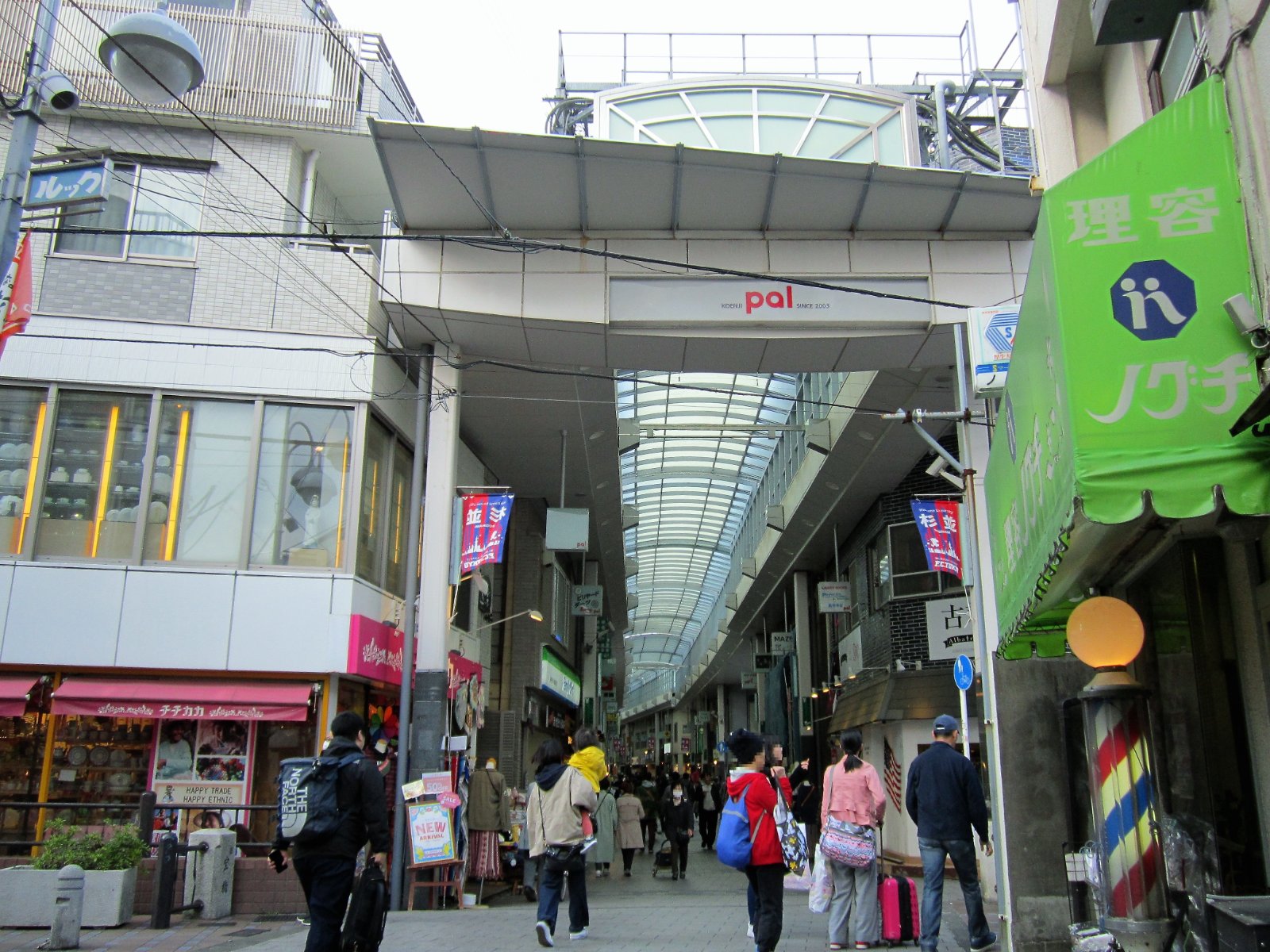
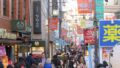
Koenji reads as one long strip but it is legally three, and knowing which is which saves you a lot of doubling back. Everything runs off JR Koenji station.
PAL is the covered arcade that starts immediately south of the station. It is roofed the whole way, so it is where you go when it rains, and it is more general retail than vintage — drugstores and cafés mixed in with the secondhand.
Look is what PAL turns into. The roof stops, the street carries on south towards Shin-Koenji, and this is the denser vintage stretch: a different merchants’ association, the same pavement. If someone tells you to shop “on Look”, they mean the open-air half. It is also where UNDER900 opened in 2023 — no staff, no fitting rooms, payment by ticket machine, and nothing on the rails above ¥990.
North of the station is the third cluster, and it is not an arcade at all: the Kitakore Building and the small streets around it, which is where the strangest stock in Koenji is. Junjo Shotengai runs north-east from the same exit and is an ordinary neighbourhood shopping street — the Mode Off branch is on it, but it is not part of the vintage walk.
End to end, PAL into Look is about fifteen minutes at walking pace without stopping. Nobody manages that.
1. Kitakore Building
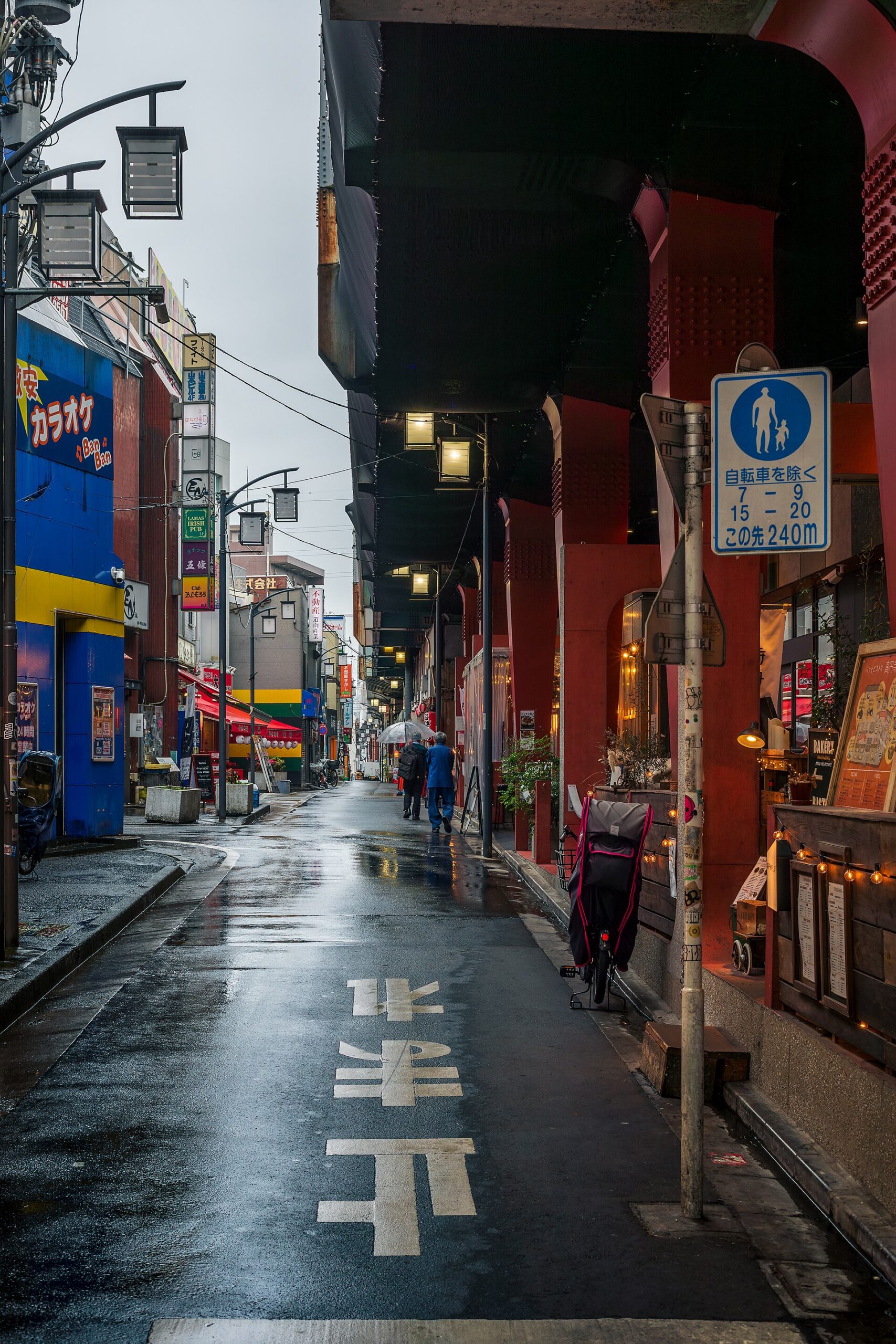
The unofficial landmark of Koenji vintage shopping. Kitakore is a dilapidated pre-WWII two-story building split into several tiny, fiercely independent shops, each with its own aesthetic and hand-altered or reworked vintage pieces rather than straight resale. Be careful with what you have read elsewhere. The tenant list that English guides copy — Southpaw, ilil, GARTER, Chim↑Pom — comes from a Time Out piece published in April 2016 and is long out of date. GARTER closed as a select shop in December 2014, and Nincompoop Capacity left for Harajuku back in 2010. As of 2026 the only clothing tenant we can confirm is Hayatochiri on the ground floor, recognisable by its monster-face storefront, selling colourful one-off reworked and select pieces. The rest of the ground floor is now a sushi restaurant and an izakaya. It is still worth the four-minute walk for Hayatochiri and for the building itself, which is a genuine pre-war survivor — but go for one shop, not for a complex.
3-4-13 Koenji-kita, on the Kitanaka-dori shopping street · about 4 minutes from JR Koenji Station (north exit) · hours vary by tenant — most open early afternoon and run to the evening · individual shops keep their own closing days
Kitakore prices surprise people, and it is worth saying why early: Japanese vintage is a curated trade, not a jumble sale, and the buyers here have already done the sorting for you. If you want a feel for the going rate before you commit to a rail in Koenji, or you walk away from something and regret it on the flight, Buyee bids and buys on Yahoo! Auctions and Mercari Japan on your behalf and forwards the parcel abroad. That is where a great deal of this stock circulates when it is not hanging in a shop.
2. Super Old
One of the original Koenji secondhand shops, open since 1990. Super Old does exactly what its name says: American regular vintage in bulk — military, riders’ jackets, boots, and Burberry trench coats on the rail year-round. Prices are notably low for Koenji, which it can afford because it runs a warehouse out in Ibaraki. The display is stacked and chaotic; you dig.
Read the house rules before you walk in. Since 2019 admission has been at the owner’s discretion, and the shop is strict about it: no food or drink inside, and no earphones or headphones. A good share of its one-star reviews are from people who wandered in with earbuds still on. Say hello, take them out, and it is one of the best-value rails in the neighbourhood.
4-22-1 Koenji-minami, Kamiya Bldg. 1F · about 3 minutes from JR Koenji Station · 13:00–19:00 · open daily, closed only 1–2 January
3. Green Light Koenji
Open since 2006 and focused specifically on footwear — classic Converse All Stars, Puma, and leather boots and shoes line the walls of this small store. A good stop if you’re after vintage sneakers rather than clothing. Worth being clear about this one: it is a shoe shop, not a clothing shop. Its own description reads “Shoes shop. (USED CLOTHING)”, and the stock is vintage and deadstock footwear — Converse, Vans, Nike, adidas, Puma, New Balance, Dr. Martens, plus American leather like Red Wing and Florsheim, with a bias toward limited and discontinued models. Reckon on roughly ¥7,000–¥23,000 a pair. There are bags and accessories too, but if you came for garments this is a detour.
4-28-11 Koenji-minami, near the Koenji Depart arcade · 3–4 minutes from JR Koenji Station (south exit) · 12:00–20:00 · no regular closing day
4. Whistler
A small, cramped shop specializing in gentlemen’s American vintage from the 1940s-1960s: leather shoes and bags, military surplus, silk pocket squares, and tailored slacks, with a few European pieces mixed in. Staff can speak English. It’s only about two minutes from Koenji Station’s south exit, making it an easy first or last stop. The real depth here is footwear — used dress shoes, boots, deck shoes and loafers in overwhelming volume, Alden and Tricker’s among them. The ground floor is shoes; clothing is upstairs on the second floor, with a small military corner covering US, British, German and Dutch issue. The owner has been in the trade 25 years and buys abroad every couple of months, so stock turns over.
One trap worth knowing: prices here are displayed tax-exclusive. You find out at the till. Add 10% to whatever the tag says before you decide.
Misato Bldg. 101, 4-30-8 Koenji-minami · about 3 minutes from JR Koenji Station · 12:00–21:00 · open year-round · its sister shop Chart shares the building through a separate entrance
Vintage is only part of what Koenji does. Our full Koenji guide adds the record shops, the 1933 bathhouse, the live houses and the junk shops — plus how to get here and which station exit leads to which shopping street.
Nothing independent opens before midday
Of fourteen independent vintage shops in Koenji, not one opens before 12:00. The most common opening time is 13:00 and the most common closing time is 20:00. Several do not open until 14:00, and one keeps 15:00–20:00 on weekdays, moving to 13:00 at weekends.
Midweek is also when they take their day off, and it is not the same day for everyone: Wednesday and Thursday are the common ones, sometimes both, and one shop closes Monday and Tuesday instead. There is no coordinated closing day in Koenji, which means any weekday afternoon will find a few shutters down somewhere.
The chains are the exception and the fallback. 2nd STREET on Koenji-minami runs 11:00–21:00. If you are in Koenji in the morning, that is what is open — otherwise the honest advice is to start the day somewhere else and arrive here at one o’clock.
How Japanese vintage shops actually work
Ignore the size on the tag
American vintage is sold in Japan with its original US label intact, so you will see S/M/L on tops and W×L inches on trousers. Those labels are close to meaningless after forty years of washing and wearing, which is why Japanese shops and listings quote 実寸 (jissun) — actual flat measurements: 肩幅 shoulder, 身幅 chest, 着丈 length, 袖丈 sleeve. Japanese buyers shop by those numbers and ignore the tag entirely. Do the same: measure a garment you already own before you fly, and ask for the jissun.
The trap for larger-framed visitors is the opposite of what you would expect. Because Japanese buyers select stock for a Japanese customer base, genuinely large sizes are thin on the ground — big-size American vintage is a specialist niche here with its own dedicated shops. A rail of “L” in Koenji is not a rail of L as you know it.
The words on the tag
- 古着 (furugi) — used clothing, the general trade word. A 古着屋 is a used-clothing shop. Covers everything from ¥700 tees upward.
- ヴィンテージ is a value and era term inside furugi. Shops also say レギュラー古着 for ordinary non-collectible used stock, which is what most of the volume shops here sell.
- 美品 (bihin) — fine condition, little visible wear.
- 難あり (nan-ari) — the one to watch. It means a known fault: a hole, a stain, a broken zip. The price reflects it and there are no returns.
- 使用感 (shiyoukan) — “signs of use”, the accepted baseline for secondhand: light fading, small repairs, pilling.
- Chains grade on letters — S deadstock, A almost unworn, B general wear, C visible damage, D heavy damage. Independents rarely bother; you inspect it yourself.
Trying things on, and what not to do
Trying on is normally fine, but you ask first — 「試着していいですか」. Stock is one-of-a-kind and the owner wants to check the condition before and after. Beyond that: say hello when you walk in, it measurably changes how you are treated in a small shop; keep a T-shirt or inner on rather than putting vintage against bare skin; keep socks on for shoes; put things back where they were; no food or drink inside; and if you spot undisclosed damage, mention it before you buy rather than after. If a shop hands you a フェイスカバー, a disposable hood, pull it right over your face before the garment goes on — it keeps make-up off the clothes.
Do not haggle at a fixed-price shop. The exceptions are a flaw you have found that was not disclosed, or an offer the owner makes you.
Photographs
Ask before shooting anything. Under Japanese law a shop can prohibit photography whether or not a sign says so, and the burden is on you to ask — 「撃影していいですか」. Expect independents to be stricter than chains, because photographs of one-off stock feed resale scouting.
Tax-free on used clothing, and what changes in November 2026
A correction we owe you, because we had this wrong in an earlier version and most English guides still do: secondhand clothing is not excluded from tax-free. Japanese law defines eligible goods by purpose, not by age — what is excluded is anything clearly bought for resale or business. There is no exclusion for used goods anywhere in the National Tax Agency guidance, and Japan’s largest secondhand chain runs an official tax-free programme covering used clothing.
The real limitation is practical, not legal: being a tax-free store requires a licence and record-keeping that small owner-run shops do not take on. In Koenji that means the chains are your tax-free options — the 2nd Street branch on Koenji-minami is a licensed tax-free store — and the independents in this guide generally are not. Look for the “Japan. Tax-free Shop” sticker rather than assuming.
Until 31 October 2026 the rules are: ¥5,000 or more, tax-excluded, at one shop on one day, with your physical passport carrying the landing-permission stamp. Photocopies are not accepted. From 1 November 2026 Japan switches to a refund system — you pay the consumption tax in the shop and reclaim it after customs confirms export on departure, within 90 days of purchase. Our tax-free guide covers the change in full.
If you buy more than you can carry, or you want to keep shopping after you fly home, a proxy service is the usual route: Buyee buys on your behalf from Japanese sites that block overseas cards and addresses, consolidates several orders into one box, and forwards it internationally.
The shops under the railway are being cleared
The row of shops under the JR viaduct west of the station has been trading since 1966. JR East’s development arm is redeveloping the strip and tenants have been asked to relocate by spring 2026, with reporting citing the buildings’ age and fire risk. One block has already gone that way — it reopened as a new-build in 2023. Nothing has been announced about what replaces the rest.
Separately, a road-widening scheme would cut through Junjo Shotengai; a petition against it gathered more than 10,000 signatures in November 2025 and the ward has not published a decision. Neither project touches the Kitakore end of Koenji, but between them they will change what the west and north-east of the station look like. If you want the current version, come this year.
Shops that closed or moved — and that guides still list
- Daidai (ダイダイ), the women’s vintage shop often described as a toy box turned upside down, closed on 25 February 2024 after twenty years.
- Don Don Down on Wednesday — the shop whose prices dropped every Wednesday, and a fixture of English-language Koenji lists — no longer has a Koenji branch. Its old space on Koenji-minami is occupied by another shop now.
- Spank! left Koenji years ago and trades in the basement of Nakano Broadway. Several guides still place it here.
- Nincompoop Capacity left the Kitakore Building for Harajuku in 2010, and GARTER closed as a select shop in December 2014 — both are still listed as Kitakore tenants in English write-ups.
Still trading and safe to plan around, beyond the four above: BIG TIME, BoobyTRAP, Bodies, Little Trip to Heaven, Slat, and Safari.
Practical notes for a Koenji day
- Do not arrive in the morning. Whistler and Green Light open at 12:00, Super Old at 13:00, Hayatochiri at 15:00. Big Time and 2nd Street open at 11:00 and are the early exceptions.
- Closing days are per shop, not per street. Whistler, Green Light and Super Old are effectively open seven days a week. Hayatochiri closes Wednesdays and Thursdays, so a Wednesday visit costs you the Kitakore stop entirely.
- Carry cash. Card acceptance at the independents is patchy and often unadvertised.
- Check the train. The orange Chuo Rapid does not stop at Koenji on Saturdays, Sundays or public holidays — the platforms are physically closed. Take the yellow Chuo–Sobu local.
- Late August is a write-off for shopping. Koenji Awa Odori fills the streets with hundreds of thousands of people. Wonderful to watch, hopeless for browsing.
Getting your bearings
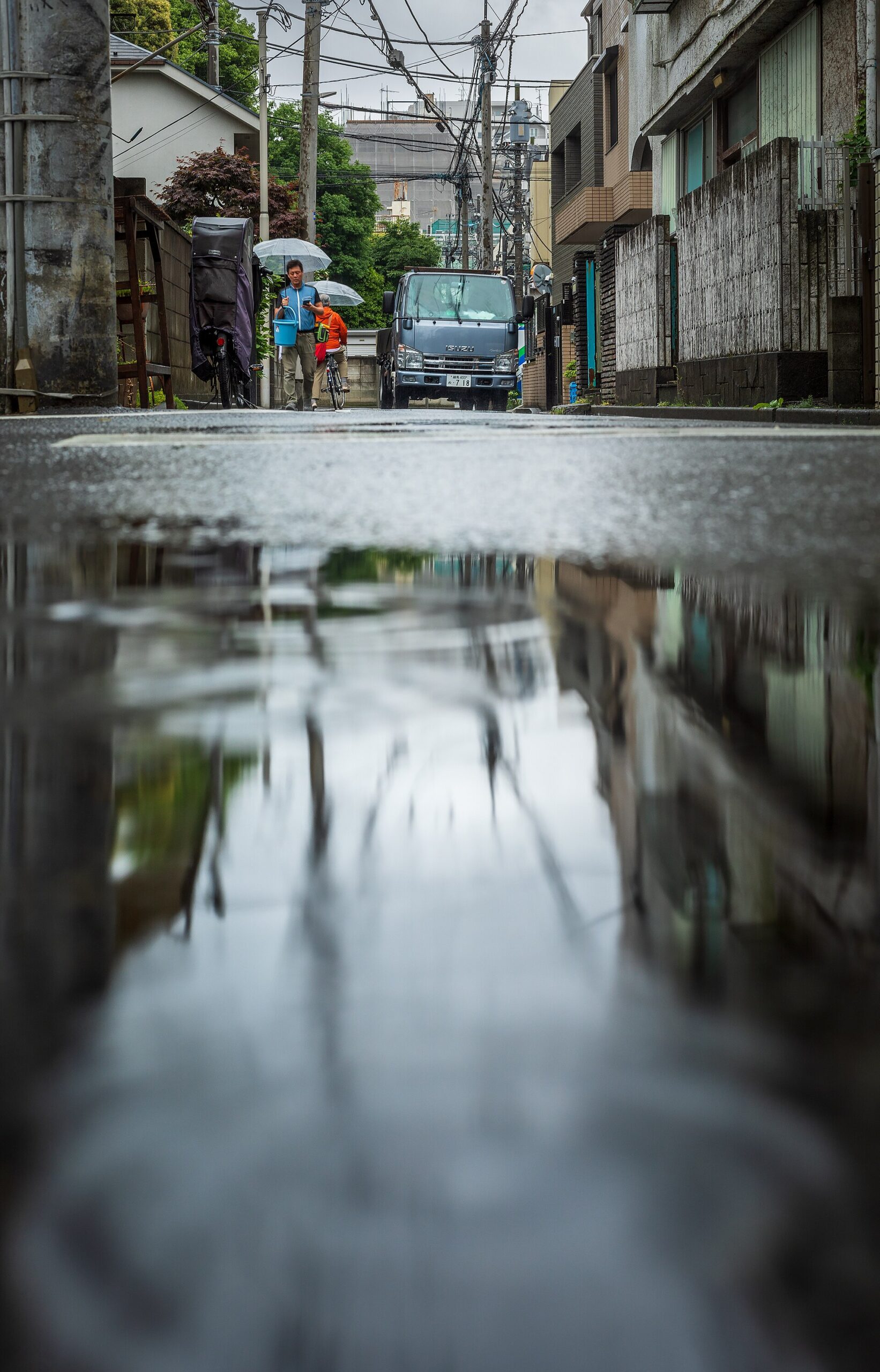
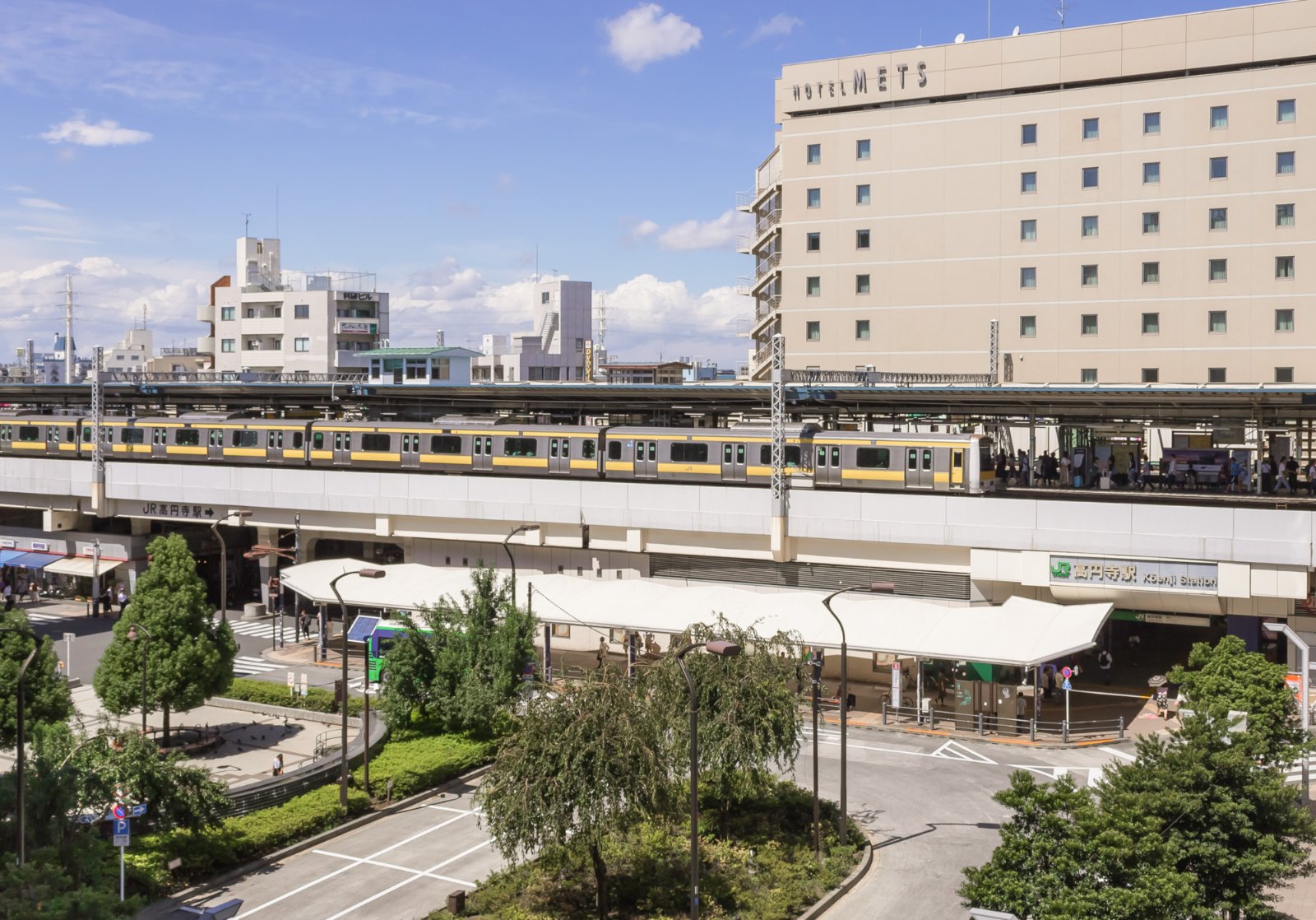
Koenji Station is on the JR Chuo and Sobu Lines, roughly 6-7 minutes from Shinjuku on local trains (note that Saturday, Sunday, and holiday rapid trains skip Koenji — take a local train on weekends). Most of the vintage shops cluster south of the station, loosely split into an east and west side by Konan Street; a common approach is to start on one side and work across to the other. Expect a mix of ¥660 bargain racks and pricier curated pieces in the same few blocks, so it’s worth popping into more than one shop before buying. Koenji has exactly one chain hotel and two independents, and one of the Shimokitazawa options has a washer-dryer in every room — where to stay in Tokyo has the verified list. Getting online before you land makes the first hour easier: a prepaid Japanese eSIM activates on arrival.
Planning to combine this with other stops? Our route and budget planner tool can help you work out an order and a rough budget.
Comments