Nakano is four minutes from Shinjuku and it is where Tokyo collectors actually shop. Almost every English guide reduces the district to one building, Nakano Broadway, and then describes that building as it was several years ago. This page covers the district: how to get here, what is in Broadway and what is not, the record shop on the wrong side of the station, where to eat afterwards, and the long list of places other guides still send you to that have closed.
Information in this guide is accurate as of August 2026. Fares reflect the JR East revision of 14 March 2026, and Japan changes its tax-free system on 1 November 2026. Both are covered below.
Getting to Nakano
- From Shinjuku — JR Chuo Line Rapid (orange), 4 to 5 minutes, about ¥199 with an IC card. No transfer. The yellow Chuo-Sobu Local does the same trip in 7 to 8 minutes.
- From Tokyo Station — Chuo Rapid, direct, 19 minutes, about ¥253. Tokyo is the Rapid line terminus, so you board at the origin and usually get a seat. Cheaper alternative: walk to Otemachi and take the Tozai Line straight through for about ¥209.
- From Shibuya — no direct train. Yamanote to Shinjuku, change to the Chuo. 16 to 18 minutes, about ¥209.
One correction worth making, because most guides get it backwards. The Chuo Rapid stops at Nakano every day, weekends included. The stations the Rapid skips on Saturdays, Sundays and holidays are the next ones west: Koenji, Asagaya and Nishi-Ogikubo. That matters if you are pairing Nakano with Koenji on a weekend, because the orange train sitting at the platform will run straight past it. Take the yellow local.
Nakano is also the western terminus of the Tokyo Metro Tozai Line, and the station is shared with JR. Most Tozai trains from Otemachi and Nihombashi end here, which is fine if Broadway is your destination. A smaller number continue west to Mitaka, and from the 14 March 2026 timetable revision the midday through-service was cut from four trains an hour to two.
On fares: JR East revised its fare table on 14 March 2026 and abolished the discounted Tokyo-area zones. The minimum fare is now ¥160, or ¥155 with an IC card. Any guide quoting ¥170 from Shinjuku was written before that.
From the station to Broadway
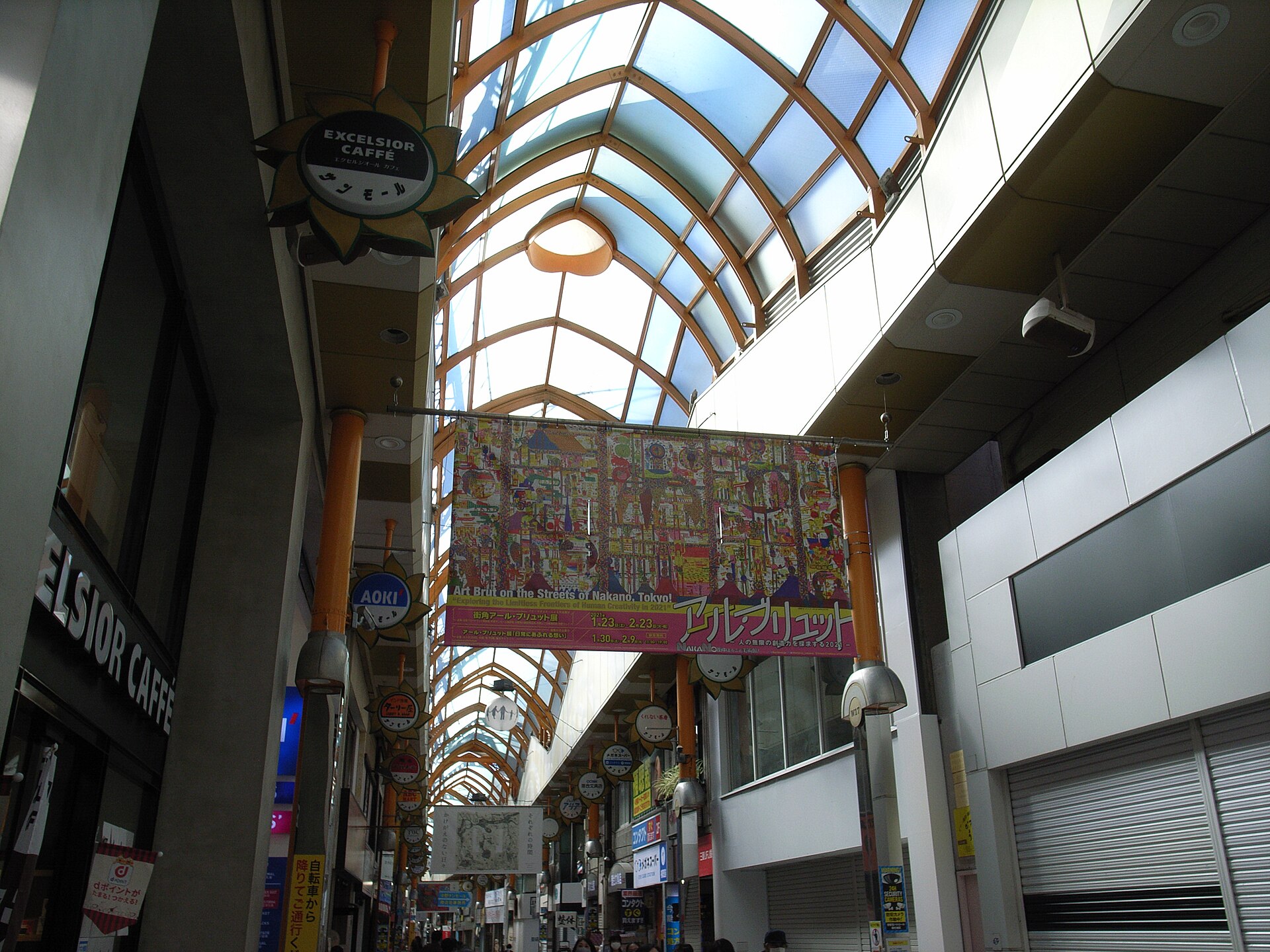
Take the north exit. The Nakano Sun Mall arcade starts at the station plaza and runs 224 metres due north, entirely under cover, and ends at the door of Nakano Broadway. There are no turns. Five minutes, and you can do it in the rain.
One 2026 caveat: the north exit is a construction site. A new JR station building, atre Nakano, opens on 9 December 2026 with around seventy shops, a new ticket gate and a rooftop plaza, and the bus stops were relocated to a temporary rotary in November 2025. The walk to Broadway is unaffected, but the plaza will not look like the photographs in any existing guide.
Broadway in short (the floor guide is separate)
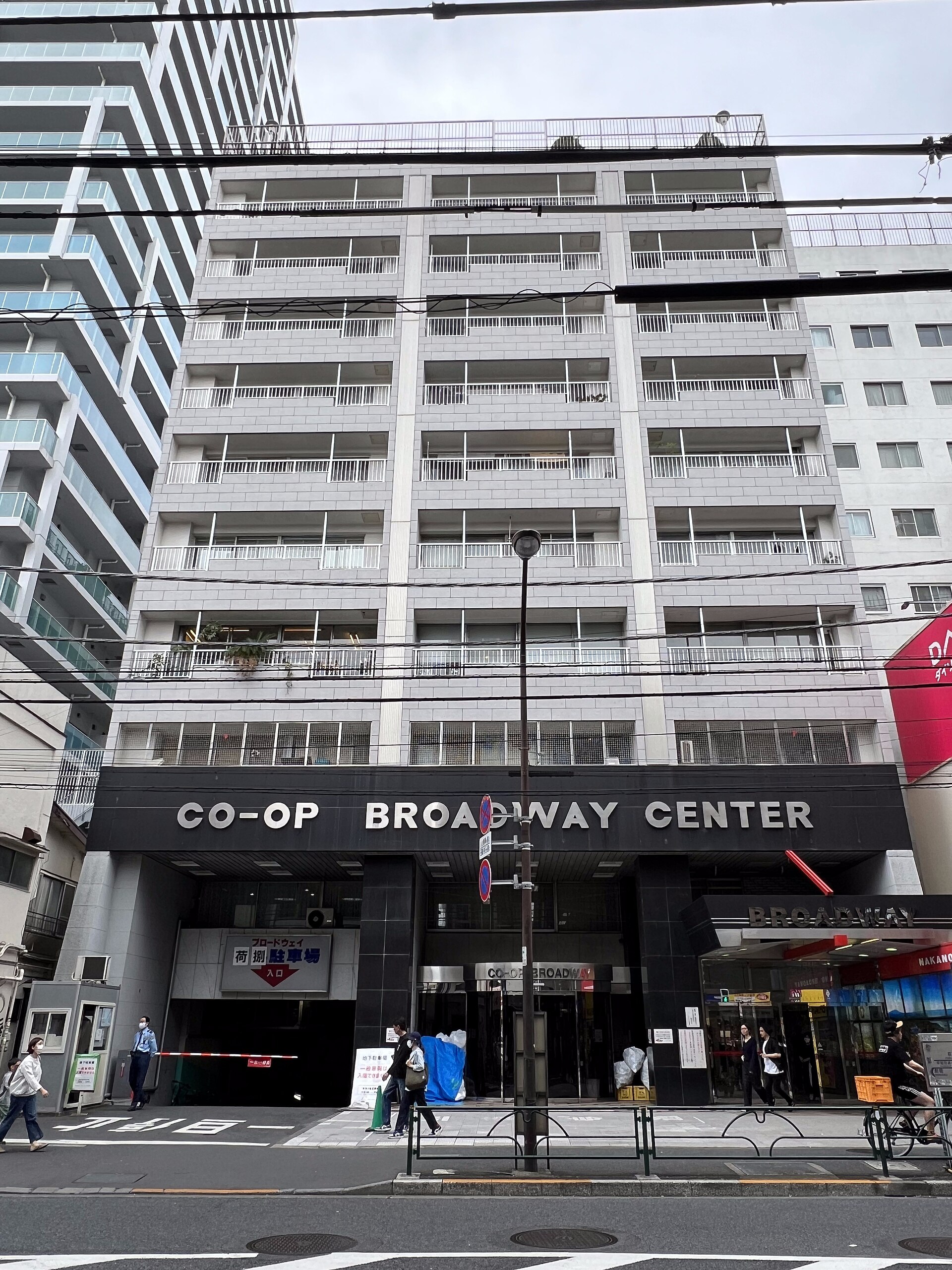
Broadway opened in 1966 and is stranger than it looks. The structure runs from B3 to the tenth floor, but shops occupy only B1 to 4F. Floors five to ten are private apartments, roughly 220 of them, with a garden and a swimming pool on the roof. You are shopping in the podium of a residential block.
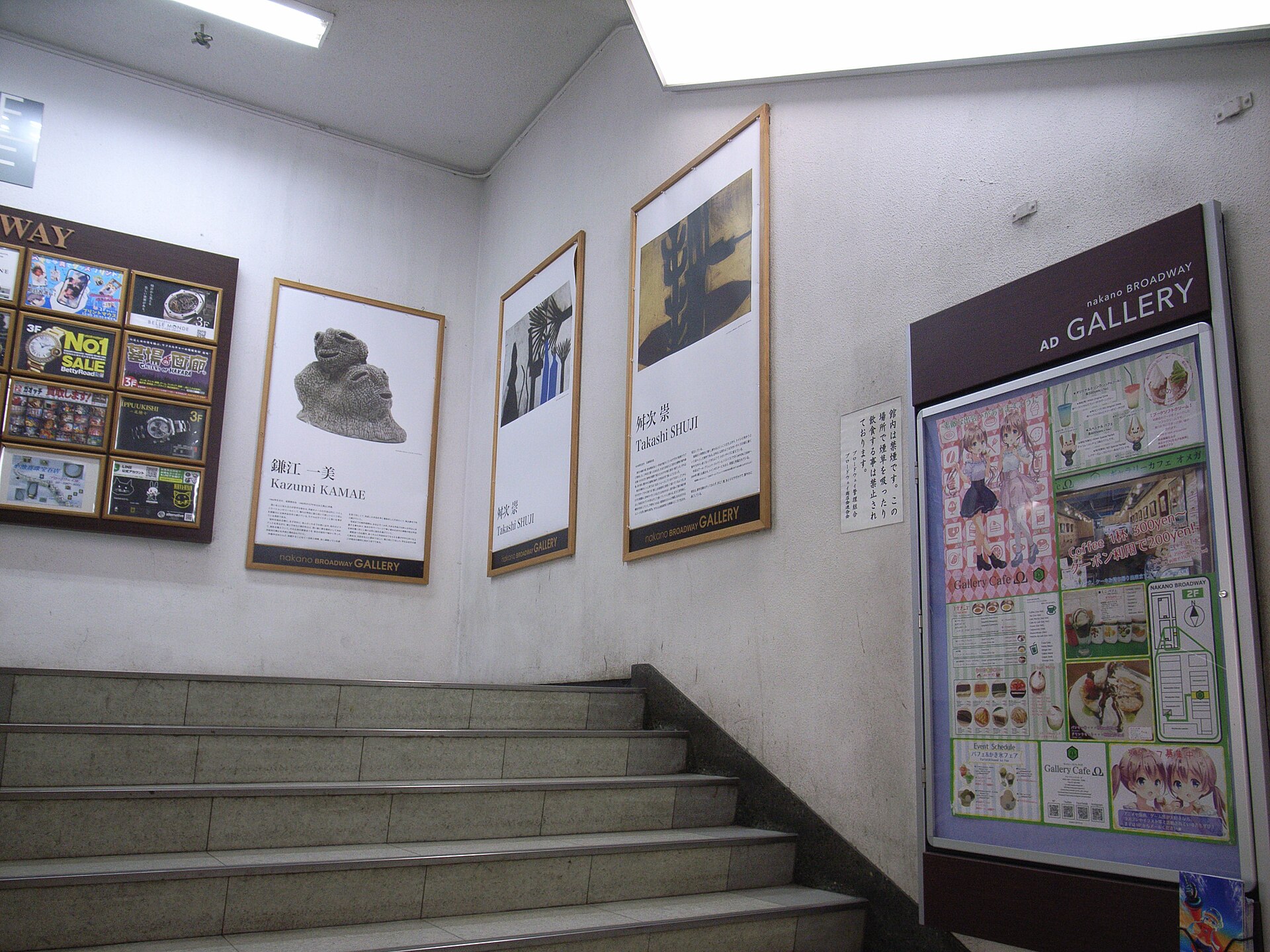
Shops occupy B1 to 4F only. B1 is food and daily goods, 1F is ordinary neighbourhood retail, and the hobby floors are 2F to 4F, with 3F the densest of them. Almost nothing opens early: Mandarake trades 12:00 to 20:00 every day of the year, Lashinbang from 11:00, so before eleven the building is a shopping centre selling shoes. Wednesday is the weakest day to come — the anchors all open, but many of the one-room shops that make Broadway worth the trip take it off. Which floor deserves your time, which Mandarake branch sells what, and the escalator arrangement that makes most visitors miss half the building are all in our Nakano Broadway floor guide.
A practical note before you leave the building. Nakano trades in one-off stock: consignment cases, private collections, single copies. Nothing here is held back for you, and almost none of it is listed online. If you get home and realise you should have bought it, the Japanese secondhand market is where it turns up again, and Buyee bids and buys on Yahoo! Auctions and Mercari on your behalf and forwards the parcel abroad. For anything still in print, CDJapan ships new domestic editions direct.
What is not in Broadway
Treating Nakano and Nakano Broadway as the same thing is the most common mistake visitors make.
- Disk Union Nakano — on the south side of the station, second floor of the Belief Nakano building, not in Broadway at all. All genres, used vinyl and CDs, and a buying counter. Weekdays 12:00 to 20:00, weekends and holidays from 11:00. If you are working through our Tokyo record shop guide, this is the Nakano entry.
- shop MECANO — inside Broadway, and about as specialised as record shops get: techno, new wave, eighties synth music. A cult shop that has survived purely on curation.
- Meiji University Nakano campus and Nakano Central Park — west of the station, and the only daylight and open space in this guide.
Where to eat and drink afterwards
Nakano has two drinking districts and they are on opposite sides of the station, which trips people up constantly.
Renga-zaka is the south exit. A brick-paved sloping backstreet about a minute from the south ticket gates, with more than fifty businesses of which over eighty per cent are food and drink — Spanish, French, Italian, sushi, yakitori, wine bars, craft beer. Almost no chains. It is the photogenic one, and it is lit in the evening.
The north exit is the scruffier, better-value one, a Showa-era warren of covered shopping streets — Showa-Shindo and Fureai Road — full of small izakaya and standing bars. This is the side that pairs with a Broadway afternoon: it is three or four minutes from Broadway on foot, so you can walk out of the building at closing time and straight into it.
And in the basement, Daily Chiko sells an eight-flavour soft serve tower that is genuinely difficult to finish and even more difficult not to photograph.
Tax-free, cash and photography
Secondhand goods are eligible for Japanese tax-free. This surprises people, and several English guides state the opposite. There is no rule excluding used items; eligibility depends on the shop being a registered export-goods sales place, on you taking the goods out of Japan unused, and on the purchase not being for resale. Mandarake, GEO and Junk World are all overwhelmingly secondhand dealers and all run tax-free.
The Nakano-specific procedure is worth planning around. Refunds for every Mandarake branch inside Broadway are processed together at the Service Counter on the fourth floor, same-day purchases only, and it closes at 19:30. So: shop the whole building first, keep every receipt, then go up to 4F last. You will need your original passport — photocopies are rejected — and a minimum of ¥5,000 before tax.
That counter is Mandarake’s, not Broadway’s. It handles Mandarake receipts and nothing else. Lashinbang, GEO, Junk World and the rest each run their own, at their own register, and they generally want you to say you are claiming tax-free before you pay rather than after. Do not save up receipts from across the building expecting one desk to sort them out.
From 1 November 2026 the entire system changes. Japan switches to a refund model: you pay the tax-inclusive price in the shop and claim the consumption tax at the airport after departure confirmation, within 90 days of purchase. Until 31 October 2026 the current in-store exemption still applies. We cover the change in detail in our guide to the 2026 tax-free rules.
On cash: Mandarake accepts cards, transit IC money and QR payments, so the anchor tenants are not a problem. The risk is the one-room independents on 2F and 4F. Carry ¥10,000 to ¥20,000 and you will not be caught out. There is exactly one cash machine in the building, a Seven Bank ATM in the B1 food arcade: it accepts foreign-issued Visa, Mastercard, JCB, American Express and UnionPay cards, but it runs 10:00 to 20:00 rather than around the clock like the Seven Bank machines in convenience stores. Draw what you need before the building shuts, or before you arrive.
On photography: there is no building-wide rule, and many shops prohibit it — glass-case shops selling figures, cels, trading cards and vintage watches most strictly of all, because photographs of stock get used for counterfeiting. Assume no photography inside a shop unless a sign or a staff member tells you otherwise, ask before shooting a display case, and never photograph other customers. Corridors and the building itself are fine.
How to plan the day
A weekday afternoon, roughly 13:00 to 18:00. The real trading window here is 12:00 to 19:30, bounded at one end by Mandarake opening and at the other by the tax-free counter closing. Avoid Wednesday, and avoid the third Wednesday of February altogether.
Nakano pairs naturally with somewhere else, because half a day is enough:
- Nakano to Akihabara — the yellow Chuo-Sobu Local runs it with no change in about twenty minutes for around ¥253, and many of those services start at Nakano so you board an empty train. If an orange Rapid is standing there instead, take it to Ochanomizu and change across the platform — same fare, a couple of minutes quicker. Akihabara is where you go for what is new; Nakano is where you go for what is out of print. Our Akihabara retro game shop guide covers that side.
- Nakano to Ikebukuro — change at Shinjuku, about fifteen minutes, around ¥209.
- Nakano to Koenji — one stop, three minutes, about ¥155, and the yellow local only at weekends. Koenji is vintage clothing and junk shops rather than collectors, so the two districts complement rather than repeat each other.
If you want the afternoon guided rather than improvised, Klook runs a half-day Akihabara walk with an anime-fan guide that slots in before a Nakano evening. To sketch the whole day out with travel times and a running cost, use our route and budget planner, and if you are still deciding where to base yourself, where to stay in Tokyo covers Nakano as an option.
Two things to know about getting your finds home. Broadway stock is secondhand, so what is on the shelf today is what somebody sold them last week — if you want something still in print, CDJapan lists new domestic releases and ships them overseas directly. And for what you saw and left behind, or what will not fit in your case, Buyee buys on Yahoo Auctions and Mercari Japan on your behalf and forwards the parcel abroad.
Closed — and still in other guides
This is the part that dates a Nakano guide fastest.
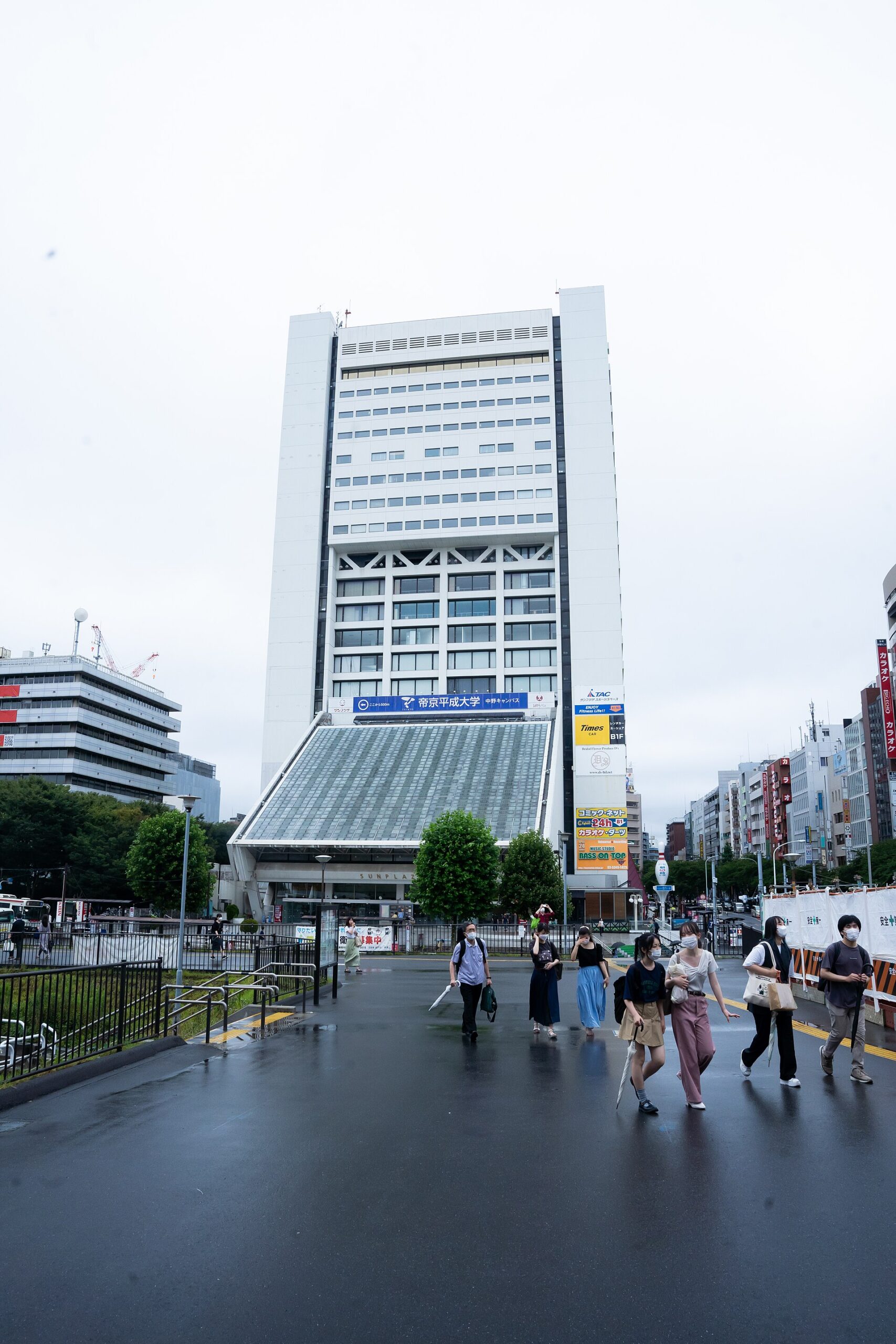
- Nakano Sun Plaza closed permanently on 2 July 2023 — and the building is still standing. The white triangular 1973 landmark with its 2,222-seat hall sits fenced off beside the north exit: closed, empty, and as of August 2026 not yet demolished. The redevelopment collapsed first. The agreement with the developer was formally dissolved on 30 June 2025 after costs rose from ¥264 billion to about ¥354 billion, and the ward only set out a revised plan in March 2026: demolish rather than renovate, and build a flexible hall for roughly 3,000 people — scalable between 2,500 and 5,000, and pitched at anime, games and esports. On the current schedule demolition and construction start in fiscal 2030 and the complex completes in fiscal 2034. So two corrections at once. Any guide still listing Sun Plaza as a concert venue is three years out of date, and any guide saying it was demolished in 2024 is quoting a timetable that was voided in 2025. You can photograph the exterior from the street; you cannot go in, and there is nothing to see beyond the shape.
- Nakano TRF, the fighting-game arcade on 4F, closed on 18 May 2025 after about twenty years. It is still marked on plenty of floor maps.
- ReCollection closed on 31 August 2025.
- BAG SHOP AOKI on 1F closed on 31 May 2025 after 75 years, taking its Wachifield stock with it.
- Fire Kids moved on 6 March 2026 — still 1F, but from unit 113 on Elevator Street to units 140 and 141 on Broadway Street, at roughly double the size. Every guide still printing the old unit number will send you to the wrong shutter.
- Older, and still listed anyway: Recomints on 3F, once five units of used CDs and laserdiscs, closed on 3 April 2016. mmts, Shoko Nakagawa’s shop, announced closure in 2020. Omocha no Pony closed on 14 June 2019.
One more trap, and it catches English-language guides in particular. Mandarake’s English site still hosts a page announcing a large reshuffle of stock between its Special branches on 9 and 16 December. The page carries no year. It is from 2017.
Nakano to Akihabara: one train, no transfer
The two districts sit on the same line. The yellow Chuo-Sobu local runs between Mitaka and Chiba and stops at every station, so Nakano to Akihabara is a single train and around twenty minutes, passing through Shinjuku and Ochanomizu on the way.
The orange Chuo Rapid also calls at Nakano, but it skips Akihabara entirely — board that one by mistake and you will need to double back from Ochanomizu. Check the colour on the side of the train, not the platform number.
That makes the two easy to pair in a single day. Our Akihabara guide covers what is worth your time at the other end.
Nearby
- Nakano Broadway floor by floor — which Mandarake branch sells what, and on which floor.
- Koenji — one stop west. Vintage clothing, junk, and the record shops that collectors go to after Nakano.
- Tokyo record shops — the wider city guide, including Disk Union branches beyond Nakano.
- Route and budget planner — build a day across these districts with travel times and costs.
Photo credits
Nakano Broadway exterior by Asanagi (CC0). Nakano Sun Mall by 番記者 (CC BY-SA 4.0). Nakano Broadway interior by 番記者 (CC BY-SA 4.0). Nakano Sunplaza by Dick Thomas Johnson (CC BY 2.0). All via Wikimedia Commons.